In the final weeks before an election, a candidate is supposed to focus like a laser on some closing message that sums up why he or she should be elected rather than the opponent. Whether by mysterious design or simple inability, Donald Trump is doing something else.
But OK, you might think, that was two months out from the election. When you get down the final weeks, though, candidates start to focus on their closing arguments and the particular voters they think are persuadable. Kamala Harris, for example, is zeroing in on wavering Republicans, and gathering endorsements from former Trump administration officials. She’s centering that pitch on a Trump-is-unfit attack, and she’s also seeking working-class voters by promising to raise rather than cut billionaire taxes.
But we’re in the home stretch now, and Trump is still all over the place, doing weird and crazy stuff almost every day. Maybe this is some four-dimensional strategy only a stable genius can understand, or maybe the stress of the campaign is aggravating his dementia, so that he simply can’t focus or control himself.
In the last eight days, Trump has
threatened to use the military against political opponents like Adam Schiff and Nancy Pelosi, who he described as “the enemy within” [1]
praised legendary golfer Arnold Palmer by telling a lengthy anecdote about his penis size [2]
ended the Q&A portion of an appearance early and spent the final 40 minutes playing his Spotify playlist and doing some kind of old-man dance [3]
“answered” a question about breaking up Google by ranting about a Justice Department suit to stop Virginia from purging its voter rolls, then attacked the interviewer for asking questions he can’t answer about how his proposals would run up the national debt [4]
warned his audience about hydrogen cars (which most of us wouldn’t even know how to buy) blowing up and leaving your unidentifiable corpse hanging in a tree [5]
told Univision’s Latino viewers that January 6 was “a day of love” [6]
expressed his amazement that “Harvey Weinstein got schlonged”, as if Harvey were the victim in his story [7]
staged a fake media event at a closed McDonalds, where he served preselected supporters through the drive-up window [8]
I’ve relegated the details of these incidents to the footnotes, because I want you to appreciate the larger view: This guy has come unhinged.
This is a point that I think is worth making to the maybe-Trump voters you know, the people who may have voted for him before and don’t see why they shouldn’t do it again: He’s getting worse.
You can look at any of the incidents above and say, “Trump’s always said and done things other politicians wouldn’t. That’s part of his charm.” But not like this, not every day. You may have liked him in 2016 or even 2020, but he’s not that man any more. [9]
Father Time is undefeated, and he gets us all eventually. What we’re seeing here is exactly how dementia works: It takes our little quirks and exaggerates them until they become serious dysfunctions.
Look at Trump’s deterioration from 2015 to today and project it forward four more years. Now think about 2028 Trump wielding all the power of the President of the United States.
[1] A week ago Sunday, in an interview with Fox News’ Maria Bartiromo, Trump started talking about “the enemy within”, who he defined vaguely as “radical left lunatics”. He suggested they be “handled by, if necessary, by National Guard, or if really necessary, by the military.”
Later in the interview, Trump said the “enemy from within” is “more dangerous than China, Russia, and all these countries,” declaring, “The thing that’s tougher to handle are these lunatics that we have inside, like Adam Schiff.” Schiff, of course, is a prominent California Democrat running for Senate, who served as the lead prosecutor in Trump’s first impeachment trial and has therefore been attacked by Trump for years.
[2] Saturday, Trump spoke at the Arnold Palmer Airport in Latrobe, PA, where the late great golfer was born. Like any politician would, Trump decided to say something nice about the local hero. So he rambled about Palmer for 12 minutes, leading up to praising Palmer’s penis.
Arnold Palmer was all man. I mean no disrespect to women, I love women, but he was all man. And I refuse to say it, but when he took showers with the other pros they came out of there saying ‘Oh my God. That’s unbelievable.’ I had to say it. I had to say it. I had to tell you the shower part because it’s true. … He was really something special.
In response, there’s something I have to say: One dementia symptom is called “disinhibition“. It’s when you start saying and doing things your mind would have stopped you from saying and doing, if it were still working properly.
South Dakota Governor Kristi Noem wound up in that embarrassing position where sycophants in authoritarian systems (like North Korea or the Republican Party) often find themselves: She had to pretend that what Trump was doing made sense. So she spent 40 minutes up there in front of the crowd, imitating his dance moves and spelling out YMCA.
[4] Tuesday at the Economic Club of Chicago Trump was asked whether the Justice Department should break up Google. Apparently, the phrase “Justice Department” set off something in his brain, and he went into a totally irrelevant rant against DoJ filing suit to stop Virginia from purging its voter rolls so close to an election. (DoJ is right in this suit, BTW. Late purges are a prime voter-suppression tactic that violates the National Voter Registration Act.) After the questioner, Bloomberg editor John Micklethwait, reminded him that the question was about Google, Trump aired his personal grievances with Google and said he would “do something” to the company without ever pointing to a genuine antitrust issue.
Later, when Micklethwait asked whether his policy proposals would drive up the national debt (they would), Trump went on a personal tirade: “You’re wrong. You’ve been wrong. You’ve been wrong all your life on this stuff.”
[5] The hydrogen car rant also happened Tuesday. Here’s how Vox’ Zack Beauchamp covered it:
[6] This was Wednesday. He not only gaslit Latino voters at a Univision event, claiming that January 6 was a “day of love”, but also dodged a question about what will happen to food prices after he deports the majority of our farm workers.
[8] Sunday he staged a weird media event: He went to a closed McDonalds, put on an apron, and served food through the drive-up window to pre-selected supporters who pretended to be customers. (If you somehow got the impression that he actually worked a shift at a McDonalds, even for a few minutes, you’ve been fooled.)
[9] Don’t believe me? Look at this clip from 2015. He’s answering questions from the crowd, and one comes from Maria Butina (who later turned out to be a Russian agent). Butina asks about how he’ll deal with Russia after he becomes president. Trump listens to her question, puts it in a broader context, and then answers it. That never happens any more.
Maybe you loved 2015 Trump or maybe you hated him, but it doesn’t matter, because he’s not that man any more.
A previous lawsuit to ban the drug used in about half of all US abortions failed at the Supreme Court for technical reasons. But a new suit fixes those problems. It also introduces some truly weird and creepy arguments. Is it really a problem if a state’s teen pregnancy rate gets too low?
Back in June, a lawsuit asking federal courts to ban the abortion drug mifepristone was thrown out unanimously by the Supreme Court on technical grounds: The plaintiffs (mainly physicians who don’t prescribe the drug) were not sufficiently affected by mifepristone’s availability to have standing to sue. So the Court never got to the heart of the case: whether the FDA was right to declare the drug safe to use.
Naturally, that couldn’t be the end of the story, so the anti-abortion forces are back with a new suit. This time three states — Kansas, Missouri, and Idaho — are suing the FDA, attempting to reverse the FDA’s approval of mifepristone for pregnancies of 7-10 weeks. And of course the suit has been filed in Amarillo, Texas (which has no connection to either the FDA or the plaintiff states) because that’s where the plaintiffs can be guaranteed to get the most anti-abortion federal judge: Matthew Kacsmaryk, who somehow failed to see the problems with the first suit. (Anti-abortion radicals Sam Alito and Clarence Thomas could see the standing issue, but not Kacsmaryk.)
The current suit has a much better standing argument: Missouri and Idaho have “almost completely banned” abortion, but their residents sometimes get mifepristone from another state. (Abortion is legal up to 22 weeks in Kansas, so I’m not sure why it joined the suit.) They then return home to use the drug, and if there are complications they may wind up in some home-state emergency room, where Medicaid may wind up paying the bill. This costs the states money, so they have suffered an injury the courts can redress.
But in addition to that reasoning, the lawsuit also includes some weird and creepy stuff, if you read deep enough into it.
Defendants’ [i.e., the FDA’s] actions are causing a loss in potential population or potential population increase. Each abortion represents at least one lost potential or actual birth. … Defendants’ efforts enabling the remote dispensing of abortion drugs has caused abortions for women in Plaintiff States and decreased births in Plaintiff States. This is a sovereign injury to the State in itself [due to] “diminishment of political representation” and “loss of federal funds”.
OK, we get it: Missouri and Idaho have reasons to want to increase their populations, and the FDA is interfering with their power to force unwilling women be their brood mares. How dare the Feds violate states rights like that?
And then it gets even a little creepier: A study has shown that birth rates increase the further that a woman has to drive to get an abortion, and that teen-age women (15-19) should be especially affected by this. (I suspect that’s because the younger ones can’t drive and the older ones probably don’t have their own cars.) But the recent bans are not raising the teen birth rate the way they ought to.
When data is examined in a way that reflects sensitivity to expected birth rates, these estimates strikingly “do not show evidence of an increase in births to teenagers aged 15-19,” even in states with long driving distances despite the fact that “women aged 15-19 … are more responsive to driving distances to abortion facilities than older women.” The study thus concludes that “one explanation may be that younger women are more likely to navigate online abortion finders or websites ordering mail-order medication to self-manage abortions. This study thus suggests that remote dispensing of abortion drugs by mail, common carrier, and interactive computer service is depressing expected birth rates for teenaged mothers in Plaintiff States, even if other overall birth rates may have been lower than otherwise was projected.
So in particular, the FDA is interfering with the states’ right to make teenage girls be their brood mares. I can’t emphasize this enough: One “injury” Missouri and Idaho complain about is that their teen birth rates are too low.
And there’s one set of girls the suit calls special attention to: those in the foster care system, who might be able to sneak out and get mifepristone somehow or have it mailed to them.
As a result of Defendants’ actions, Plaintiffs have suffered injury to their sovereign interests in enacting and enforcing their laws. Defendants … seek to displace and nullify the States’ state-law parental rights of notice and consent for abortions for teen girls in foster care.
Just picture this for a second: A girl for one reason or another has lost her birth parents. Maybe they died, or maybe they misparented in some way that caused the state to take the girl away. Either way, there’s bound to be some trauma involved.
Traumatized girls sometimes take foolish risks, and it’s also possible they might be sexually abused by a foster parent or by some other adult their foster parents didn’t watch closely enough. So unwanted pregnancies happen, and Missouri’s abortion ban has no rape or statutory rape exception. But the girl is so desperate and so determined to end the pregnancy that she might figure out how to do something about it. Being such a loving parent, however, the state wants to thwart that desire, make her carry a pregnancy for nine months, and then give birth to a child she doesn’t want.
I think if I had gone through something like that, I might be a serial killer.
What lovely, God-fearing states you’ve got there, Missouri and Idaho. (And I still can’t figure out what Kansas is doing.)
Maybe more important than what I’m writing about today is what I’m not writing about: I’m not analyzing polls and trying to predict who will win the election.
One thing I often warn against on this blog is speculation: It can eat up all your time and drive you nuts. And since no one actually knows what’s going to happen, speculating about it usually serves no purpose beyond entertainment. So if you enjoy trying to forecast things in a who’s-going-to-win-the-World-Series way, feel free. It’s harmless. But it’s also unproductive. One way or another, the election will happen and we’ll find out then who wins.
Personally, I find that I’m not enjoying whatever time I spend on speculation. Predictions, good and bad alike, just raise my anxiety. So I’m trying to avoid them.
Speculation also has an addictive quality. Anxiety about the future just leads to looking for more speculation to find reassurance, which usually just raises more anxiety. A better way to assuage your anxiety is to do something. Vote early. Write a check. Encourage your apathetic friends to vote. Volunteer.
So anyway, what am I covering this week. First, because the election isn’t the only thing happening in the world, I read the 199-page lawsuit three red states filed to roll back the FDA’s approval of the abortion drug mifepristone. I know, you thought that lawsuit got dismissed. But that was on a technicality, which this lawsuit tries to fix. And it mostly does fix the technical problem, but it also introduces some truly creepy arguments that aren’t getting nearly enough attention. Like this: Missouri, Kansas, and Idaho are complaining that their teen pregnancy rates aren’t high enough.
So anyway, that reading led to the article “Mifepristone, round 2”, which is done and should post shortly.
My second featured post this week looks at how Trump seems to be coming apart the closer the election gets. That’s “Trump’s Weird Week”, and it should appear between 10 and 11 EDT. The weekly summary ten has a lot of odds and ends, and should post around noon.
This week everybody should have been talking about good economic news
The pandemic laid a one-two punch on the world economy. First came the job losses, and then an inflation spike associated with reopening the economy. Those same two phenomena happened all over the world, which is why (as I often point out) it’s a mistake to blame either Trump for the job losses or Biden for the inflation.
Sadly, though, most Americans understand only half of that truth: They give Trump a mulligan for his job losses while blaming Biden for inflation. In the public mind, the “Trump economy” is the pre-Covid 2019 economy, while Biden is held responsible for everything that has happened since.
What is remarkable, though, is how fast the US economy has bounced back, and the Biden administration deserves a lot of credit for that. In 2023, inflation-adjusted household income very nearly regained its 2019 high, and may well be at record levels by now. I have had trouble finding apples-to-apples statistics from other countries, but I believe no comparable nation has done as well with the Covid one-two punch as the US has.
This week we got more evidence for this view: The September jobs report came out showing a very strong economy: 254K new jobs were added (about 100K beyond economists’ expectations) and the unemployment rate ticked down to 4.1%.
Other good news: The East Coast dockworkers strike was suspended, preventing a major disruption of the economy just weeks before the election. (The work stoppage we did see is comparable to a spate of bad weather.) The shipping companies made a new offer, which was close enough to what unions are looking for to continue negotiations through January 15.
By coincidence, this week was also marked by the publication of a new book, The Message, by Ta-Nehisi Coates, who is the foremost Black public intellectual, and possibly the most significant American public intellectual. The final chapter of the book discusses his trip to the West Bank. (I haven’t read the whole book, but I have read that chapter.)
The controversy this chapter has raised underlines a point I made in the featured post: how hard it is to have a reasonable discussion of Israel/Palestine. A broad theme of The Message is how writers shape the world by deciding whose stories get told. People whose stories aren’t told don’t get fully envisioned as human beings.
Coates sees the Palestinians as such people, and tries to counteract their less-than status by telling some of their stories. He notes that no news organization he is aware of has a Palestinian bureau chief in Jerusalem. When Palestine is discussed in American media, Palestinian voices are usually not included. (I’m guilty of this myself. Even when I criticize Israel’s treatment of Palestinians, I am usually linking to liberal American Jews like Peter Beinart.)
In some circles Coates has been met with vitriol, and broad implications that he is antisemitic. One CBS interviewer in particular went after him for not including more Israeli points of view. (He does talk to ex-IDF Israelis sympathetic to the Palestinian situation.) Coates kept his cool and explained that Israeli points of view are already widely available in American media.
Coates has also faced criticism for not being a Middle Eastern expert and missing the complexity of the situation. If I might put words in Coates’ mouth, he seems to be saying that solutions may be complicated, but certain basic moral judgments are simple.
The book makes many analogies between the Palestinian apartheid and slavery/Jim Crow in the US, so I’ll make another one: Before the Civil War, many Northerners toured the South and came back to denounce slavery. Universally, Southerners responded the way many have responded to Coates: They said the Northerners didn’t understand the complexities of the situation. How would a post-slavery Southern economy work? How would the races coexist? It was complicated.
But you didn’t need answers to those questions to look at the immediate reality of slavery and say “This is wrong.” That’s what Coates does. He wanders through neighborhoods of the West Bank, sees how people are treated, and says “This is wrong.”
and Jack Smith’s evidence
The Supreme Court has done a lot to help Trump get away with his January 6 coup. They sat on their hands to delay their decision as long as possible, and then invented a notion of “presidential immunity” that no lower court had any notion of. It’s not in the Constitution and there’s no indication that any pre-Trump administration believed it had such immunity.
As a result, Trump’s trial has been pushed past the election, and may not happen at all. This means that voters will have to decide the 2024 election without knowing precisely how Trump tried to invalidate the 2020 election. January 6 has become a he-said/she-said event, rather than the subject of a jury verdict.
But part of the delay is that the district court has to determine what charges and what evidence can survive the Supreme Court’s ruling. So Jack Smith assembled a 165-page brief describing the evidence he wants to present at trial and why he thinks it should not be subject to presidential immunity. This is as much of the evidence against Trump as the public is going to see before the election.
As usual, Trump has had nothing specific to say about the evidence presented in the filing, but only assailed it in general as “election interference” and a “witch hunt”. In response, two facts are worth pointing out:
Very little of the evidence the special counsel has collected comes from Democrats or never-Trump Republicans. Nearly all of it references grand jury testimony under oath by Republicans who supported the Trump campaign through Election Day. (A few, like Bill Barr, only broke with him after he started lying about his electoral defeat.)
The brief is appearing now, just before the election, because Trump has pursued every opportunity for delay, and the Republicans on the Supreme Court have aided and abetted him at every turn. Otherwise, this trial would have been over by now. If he really were innocent — which he isn’t — Trump could have cleared his name long before the election.
and the VP debate
Last week I said that VP debates seldom move the needle in an election, and I think that held true for the Walz/Vance debate. [video, transcript]
Debates always have two impacts: in the moment and over time. People who watched the debate live tended to see Vance as the smoother debater who had fewer awkward moments. But the lasting impressions favor Walz: He confronted Vance directly on the question of who won the 2020 election, which Vance could not bring himself to answer. And Vance’s objection to being fact-checked crystallized his ticket’s approach, which is to get away with saying whatever they can, without regard to truth. Going forward, both clips provide fodder for Harris/Walz attack ads.
Vance’s nonanswer underlines something more general and ominous: The GOP has become an autocratic party where no one dares to offend the autocrat. We saw the same thing this weekend with Speaker Mike Johnson.
On Sunday, George Stephanopoulos asked Johnson whether he can “unequivocally” say that Biden won the 2020 election and that Trump lost. The long-debunked election conspiracy is something that the former president continues to bring up at his campaign rallies, even a month before the 2024 election.
“See, this is the game that is always played by mainstream media with leading Republicans. It’s a gotcha game,” Johnson said on ABC’s “This Week.” “You want us to litigate things that happened four years ago when we’re talking about the future. We’re not gonna talk about what happened in 2020, we’re gonna talk about 2024 and how we’re gonna solve the problems for the American people.”
If Trump started saying that the sky is purple, it would become a “gotcha question” to ask other Republicans what color the sky is. They cannot contradict him, no matter how ridiculous his statements are. And this is what Trump wants for the country.
and the Helene aftermath
Most hurricanes’ worst damage comes from the high winds and storm surge near landfall, as when Katrina hit New Orleans. But Helene‘s most serious impacts have come from the heavy rains that it carried inland to places like Asheville, North Carolina, which sits in the Appalachian mountain range.
This situation has created opportunities for unscrupulous demagogues. Marjorie Taylor Greene, for example, has promoted the outrageous conspiracy theory that Helene was sent towards rural areas that the Biden/Harris administration doesn’t care about.
Yes they can control the weather. It’s ridiculous for anyone to lie and say it can’t be done.
The all-powerful “they”. There’s nothing “they” can’t do. Fortunately, that charge was too crazy to catch on, and MTG’s tweet mainly resulted in ridicule directed at her.
But Donald Trump’s lies, echoed by many other Republicans, have been just credible enough to cause harm. Most damaging has been the claim that FEMA has run out of money because it spent it all housing foreign migrants.
At a campaign rally in Michigan on Thursday, Trump claimed that “Kamala spent all her FEMA money, billions of dollars, on housing for illegal migrants, many of whom should not be in our country.” He added in an election-related conspiracy theory, saying, “They stole the FEMA money, just like they stole it from a bank, so they could give it to their illegal immigrants that they want to have vote for them this season.”
This statement packs a number of lies into a small package.
Noncitizens can’t vote, and there is no evidence that Harris or anyone else is trying to get them to.
Housing for migrants is a separate appropriation from disaster relief. FEMA manages both pots of money, but keeps them separate. Nothing has been stolen.
FEMA has not run out of money to respond to the disaster. If the $35 billion appropriated for disaster relief runs out, Congress can pass a supplemental appropriation, which it frequently does after major disasters. (If there is any delay in that process, it will be due to Speaker Johnson.)
Spreading this kind of disinformation has negative consequences for the very people Trump claims to be standing up for: If they think there’s no money, they may not apply for help they need.
And that’s just the tip of Trump’s iceberg of Helene-related lies. He has also falsely claimed
Democrats don’t want to help victims in Republican areas. (Republican governors and other local officials say otherwise.)
Federal help maxes out at $750. (In fact, $750 is what victims can get for immediate needs like groceries, and doesn’t affect their eligibility for further help.)
Federal helicopters aren’t rescuing people in North Carolina.
This is all just stuff he makes up for his own political advantage. It’s further evidence of a major Harris-campaign theme: Trump doesn’t care about you. He only cares about himself.
At long last, the NYT raises the question of Trump’s age and whether he is all-there mentally.
Trump and Vance are claiming they don’t support a federal abortion “ban”, but that’s because they’ve started calling it something different: a “minimum national standard” on abortion.
Josh Marshall has been digging deep into the Trump get-out-the-vote (GOTV) operation, which might be trying out a novel theory or might just be failing.
GOTV is an important part of the inside-baseball of campaigning. Typically, GOTV isn’t about convincing people to vote for you — that’s already happened or not happened — it’s about making sure that the people who lean in your direction actually do vote. So you develop lists of people to call, looking for folks who don’t always vote, but have told past callers that they favor you. (Or maybe they just look like your voters demographically). Close to the election you contact those iffy voters, making sure they know where their polling place is, how they’re going to get there, and so on, offering help as needed.
By itself, GOTV isn’t going to produce a landslide, but a good vs. bad GOTV operation can make the difference in a close election. That’s why some Republicans have been expressing alarm about the apparent lack of a Trump GOTV push. Marshall has been trying to get to the bottom of these rumors.
What he’s finding is that Trump people had a decentralized GOTV concept intended to supplement the usual door-knocking and phone-banking. But more and more it looks like the decentralized plan is replacing their traditional GOTV, which is a big gamble. Partly that’s happening because the money for traditional GOTV instead went to pay Trump’s legal bills.
Susan Faludi writes in the NYT about how the “protection” theme works differently for male and female candidates. Trump can fear-monger and then tell women: “I will be your protector.” But a woman offering men protection runs into a deep resentment: “You cannot defend us without unmanning us.”
She also notes how protection comes in two flavors: protection from threats in the real world, and symbolically acting out the tropes of strength.
The symbolic is performative. Those who crave it don’t actually want effective measures to alleviate a threat. They wish to rage against the threat, and they seek a protector in chief who validates their wrath. For them, war’s the point, not victory — outrage, not outcomes
… Time and time again, nations that have sought protection under a fantasy führer — or a real one — have reaped the whirlwind. This fall, I’m voting my fears, too, but what I fear most is the whirlwind. I’m voting my need for protection, as well. I want a Constitution protected from the paper shredders. I want democratic process and the rule of law protected from rioters and scammers. I want reasoned and stable governance, exemplified by a president whose lodestar is the well-being and security of her citizenry, not the bloodlust of his base. I want, most of all, the fate of my nation to be protected against the judgment that history’s gods level against strongman societies.
The protection theme exemplifies the often misunderstood concept of structural privilege or structural discrimination. Male and female candidates can make the same promises, but the man will be cheered while the woman provokes dismay or anger. It’s not how she words or delivers the pledge, it’s the fact that she’s a woman.
Saturday, Elon Musk spoke (and danced wildly) at a Trump rally in Pennsylvania. I can only imagine the right-wing outrage if Mark Zuckerberg or any other social-media mogul appeared at a Harris rally.
This is a common pattern: Baseless right-wing accusations (like that social media favors Democrats) often lead to the Right blatantly doing that very thing. In the 2020 cycle, for example, Trump’s false charge that Biden had stolen the election justified his very real attempt to steal it through fraud and force.
and you also might be interested in …
Cory Doctorow uses Amazon Prime’s decision to start showing its customers even more ads to illustrate the general concept of “enshittification” (a term he coined in 2022).
Every ad that Amazon shows you shifts value away from you — your time, your attention — to the company’s shareholders.
That’s the crux of enshittification. Companies don’t enshittify — making their once-useful products monotonically worse — because it amuses them to erode the quality of their offerings. They enshittify them because their products are zero-sum: the things that make them valuable to you (watching videos without ads) make things less valuable to them (because they can’t monetize your attention).
Effective immediately, all Oklahoma schools are required to incorporate the Bible, which includes the Ten Commandments, as an instructional support.
Now he’s asking the legislature for $3 million to buy 55,000 Bibles to put in Oklahoma’s classrooms. But issues of church-and-state aside, The Oklahoman found something fishy.
According to the bid documents, vendors must meet certain specifications: Bibles must be the King James Version; must contain the Old and New Testaments; must include copies of the Pledge of Allegiance, Declaration of Independence, U.S. Constitution and the Bill of Rights; and must be bound in leather or leather-like material.
Almost no Bibles on the market meet all those criteria, but two do: The God Bless the U.S.A. Bible for $60 each, and the We the People Bible for $90. Both are endorsed by Donald Trump. A few months ago, BBC reported that Trump had made $300,000 from the first one.
Paying $60-$90 for a leather-bound Bible just isn’t necessary. The text of the Bible can be downloaded free online, and there are a variety of free Bible apps for your phone. If you insist on a physical copy, you’ll find a wide selection for less than $10. In any version, you can look at John 2:14-16 to see how Jesus felt about this kind of profiteering.
and let’s close with something that turns down the voltage
You don’t see a lot of cartoons based on electrical engineering concepts.
Hamas’ October 7 attacks on Israel were a horrifying beginning to a horrifying year of violence and death.
One year ago today, Hamas fighters from Gaza crossed into Israel, killing 1,139 people, including 695 Israeli civilians. Often, war produces civilian casualties because unfortunate people are in the wrong place at the wrong time, but here the civilians seem to have been specifically targeted. More than half the civilians were killed while attending a music festival. Another 250 Israelis, including 38 children, were taken back to Gaza as hostages.
The attack was both tactically brilliant and a moral atrocity. It succeeded largely because Israel had not imagined Hamas could pull off such a thing. Afterwards, the world wondered how anyone could do such a thing.
Immediate reactions. For a time, Israel was the object of more worldwide sympathy than perhaps at any moment since its founding, and certainly since its victory in the 1967 war. Many Americans remembered the aftermath of 9-11, when Le Monde’s top headline was “Nous sommes tous américains“. (“We are all Americans”.) We recalled both the rush of feeling that the world was behind us, and the regret of recognizing how badly we had screwed that up by launching wars we had no idea how to end. To the extent that we supported Israel — and how could we not on October 8? — Americans hoped Israelis would learn from our bad example.
On October 10, Thomas Friedman raised the exact question somebody should have asked George W. Bush on 9/12: “What do my worst enemies want me to do — and how can I do just the opposite?”
The October 7 attack had little military value. Rather, the monstrous attack was designed to provoke a response in kind, one that would show the world — especially the Arab world — what monsters the Israelis can be. Friedman’s advice: Don’t give them that response.
What Israel’s worst enemies — Hamas and Iran — want is for Israel to invade Gaza and get enmeshed in a strategic overreach there that would make America’s entanglement in Falluja look like a children’s birthday party. We are talking house-to-house fighting that would undermine whatever sympathy Israel has garnered on the world stage, deflect world attention from the murderous regime in Tehran and force Israel to stretch its forces to permanently occupy Gaza and the West Bank.
The wider war. But a year later, that’s where we are. Neighborhood-by-neighborhood fighting in densely populated Gaza, plus bombing that the Israelis claim is intended to minimize civilian casualties, has resulted in over 41,000 Gazan deaths, and 1.9 million displaced people. More than 300 aid workers have been killed. No one knows how many of the dead Gazans were Hamas fighters, but the estimated 14,000 dead children clearly were not. Israeli attacks have tapered off recently, but still continue. Yesterday:
For the first time in months, Israel sent a column of tanks into northern Gaza and launched major operations there, surrounding Jabalia, the largest of strip’s eight historic refugee camps, as strikes hit a mosque and a school in attacks that killed 24 and wounded nearly 100, according to the local Hamas-controlled government. … Sunday, Israel issued a new blanket evacuation order for all of the northern Gaza Strip, where hundreds of thousands of civilians remain, as a military spokesperson declared a “new phase of the war” against Hamas.
The Biden administration repeatedly has tried to broker a ceasefire-for-hostages deal. 105 hostages were released during a brief ceasefire and prisoner exchange in November, and each side blames the other for why further negotiations broke down. A few additional hostages have been rescued by Israel, some have died, and the fate of the rest is still unknown.
Meanwhile, the war continues to widen. Israel has been bombing Lebanon to target Hezbollah, and now has ground troops in southern Lebanon in what is described as “the largest military operation there since 2006”, killing an estimated 2,000 people so far. Iran has responded by firing ballistic missiles at Israel, the vast majority of which were shot down with help from the US.
Israeli fire has killed at least 722 Palestinians in the West Bank since Oct. 7, Palestinian health officials say.
Victory? The Israeli military operations have had successes, killing top leaders of both Hamas and Hezbollah. Much of the Hezbollah leadership was lost in an imaginative pager attack. Vox’s Robert Greiner puts a triumphal spin on the current situation:
What this means is that we can stop fearing a wider regional war because it is already being fought, and Israel has largely won it. And with it, the relative deterrence Israel sought has been restored. … As for Palestine, its future is a question no more. Diplomats from the US, Europe, and the Arab world can save themselves the effort: There will be no negotiations worthy of the name and no solutions in Gaza or the West Bank, other than those unilaterally imposed by Israel and tacitly permitted by the US.
… Israel’s 40-year program of inexorable dispossession of Palestinians through land seizures and settlement, a process long slow and implicit, has become increasingly rapid and explicit since October 7. Even if occupied Palestinian lands aren’t formally annexed, a unitary Israeli state from the river to the sea is all but inevitable.
The Guardian’s Andrew Roth views Israel’s situation less favorably, arguing that the inexorable economics of missile/anti-missile struggles works against it: Offensive missiles are cheaper and easier to replace. If Iran keep firing, it can wear down the Iron Dome. At that point, protecting Israel’s cities would require not just an occasional raid, but a persistent and widespread bombing campaign against Iran.
Pushing my earlier 9-11 analogy a little further, I wonder if Israel is at its “Mission Accomplished” moment, paralleling where the US was in 2003, when resistance in both Afghanistan and Iraq seemed to have been crushed.
As The Economist puts it: “Israel has succeeded at hammering its enemies, but has not yet worked out how to end its wars.” Hamas and Hezbollah losses are significant, but in the long run should be easy to replace, now that a whole new generation has been given deeply personal reasons to hate Israel.
Contrary to Israeli claims that force will beat Palestinians into submission, survey after survey shows the reverse since Israel invaded Gaza. In a poll conducted in the West Bank by the Jerusalem Media and Communication Centre, support for “military resistance” grew from 40% in May this year to 51% in September, whereas support for “peaceful political action” fell from 44% to 36% in the same period.
Polling Gaza is probably impossible at the moment, but I would imagine that the swing in sentiment is even larger there.
The long view. I approach this conflict through the lens of an essay I wrote in 2004: Terrorist Strategy 101: a quiz. The quiz assumes you are a violent extremist, and its first two question presage where it’s going: “What is the first and biggest obstacle between you and victory?” and “Who is your best ally?”
The first and biggest obstacle to your victory is that the vast majority of the people who sympathize with your issue are not violent extremists. … Most people on both sides of your issue just wish the issue would go away. If you’re not careful, those apathetic majorities will get together and craft a compromise. And where’s your revolution then? So your first goal as a violent extremist is not to kill your enemies, but to radicalize the apathetic majority on your side of the issue. …
In radicalizing your apathetic sympathizers, you have no better ally than the violent extremists on the other side . Only they can convince your people that compromise is impossible. Only they can raise your countrymen’s level of fear and despair to the point that large numbers are willing to take up arms and follow your lead.
The picture the essay presents is of opposing pairs of extremists with a common interest in radicalizing the center. (“Inverting the Bell Curve” is how the quiz frames it.) The two extreme factions are trying to kill each other, but they also depend on each other. At the time, I was pointing out the symbiotic relationship between George W. Bush and Osama bin Laden. But I used Hamas/Israel as an example in a paragraph that looks eerie today:
Naive observers frequently decry the apparent counter-productivity of extremist attacks. Don’t the leaders of Hamas understand that every suicide bombing makes the Israelis that much more determined not to give the Palestinians a state? Don’t they realize that the Israeli government will strike back even harder, and inflict even more suffering on the Palestinian people? Of course they do; they’re not idiots. The Israeli response is exactly what they’re counting on. More airstrikes, more repression, more poverty — fewer opportunities for normal life to get in the way of the Great Struggle.
The cycle of violence may be vicious, but it is not pointless. Each round of strike-and-counterstrike makes the political center less tenable. The surviving radical leaders on each side energize their respective bases and cement their respective holds on power.
In this respect, both Hamas’ October 7 attacks and Netanyahu’s response have been enormously successful. Pre-10/7, the Palestinian situation was drifting towards irrelevance. In the October 10 article quoted earlier, Thomas Friedman flashed back to a picture that appeared in the Israeli press on October 3, of an Israeli government official visiting Saudi Arabia for a conference “wearing a traditional Jewish prayer shawl and yarmulke while holding up a Torah scroll with the Riyadh skyline in the window beyond.”
For Israeli Jews, that picture is a dream come true — the ultimate expression of finally being accepted in the Middle East, more than a century after the start of the Zionist movement to build a modern democratic state in the biblical homeland of the Jewish people. To be able to pray with a Torah in Saudi Arabia, the birthplace of Islam and the home of its two holiest cities, Mecca and Medina, is a level of acceptance that touches the soul of every Israeli Jew.
But that same photo ignites a powerful and emotional rage in many Palestinians, particularly those affiliated with the Islamist Muslim Brotherhood, including Hamas and Palestinian Islamic Jihad. For them, that picture is the full expression of the Israeli prime minister Benjamin Netanyahu’s supreme goal: to prove to all naysayers, indeed to rub their noses in the fact, that he can make peace with all the Arab states — even Saudi Arabia — and not have to give the Palestinians a single inch.
As far as diplomacy goes, that has been Netanyahu’s life’s mission: to prove to everyone that Israel can have its cake — acceptance by all the surrounding Arab states — and eat the Palestinians’ territory, too.
But Netanyahu was also facing political disaster: October 7 was not just a daring Hamas plan, it also pointed to security lapses on the Israeli side. The prime minister’s popularity plummeted. Simultaneously, his trial on corruption charges was crawling forward. An end to the war would also end the war cabinet Netanyahu headed, leading to elections that he would most likely lose.
But he has not brought the war to a conclusion, and so has not had to face either elections or jail. He continues to have no plan for what happens after the war. Now Israel’s tactical successes have redounded to his benefit, and it appears possible that he could even win another round of elections.
A world renewed by violence. Like Bush before him, Netanyahu is now offering visions of a military victory that reshapes the entire Middle East. A week ago, in a speech he gave in English so that it would be understood in Iran, Netanyahu said:
Our two ancient peoples, the Jewish people and the Persian people, will finally be at peace. Our two countries, Israel and Iran, will be at peace.
How will this happy day come to pass? Through regime change in Iran. Israel will change nothing, but Iran will change into a form Israel will find more congenial. And so there will be peace.
When Iran is finally free, and that moment will come a lot sooner than people think — everything will be different.
I can imagine no message better designed to prop up the Iranian regime. Going forward, every Iranian protester, every Iranian dissenter, can be cast as an agent of the Jews. Every critic of the regime shares responsibility for whatever bombs Israel decides to drop.
Does Netanyahu understand this? Of course he does. He’s not stupid. He understands that he needs the mullahs in Tehran as much as they need him. Otherwise, people across the region might get on with their lives and peace might break out. Then where would either flavor of extremist be?
In the US. Sadly, the processes at work in Israel and Palestine have also been playing out here. For the most part, Americans are exchanging words and possibly threats rather than bombs, but here also the Bell Curve has been inverting. If you criticize Netanyahu, you must be antisemitic and support Hamas. If you criticize Hamas, you must support genocide against Palestinians.
Louisiana Senator John Kennedy’s grilling of Maya Berry, the executive director of the Arab American Institute, was far too typical. Ostensibly, the hearing was about hate crimes in the US, which victimize Jews and Muslims alike. But Kennedy would not listen to testimony about Muslim victims. “You support Hamas, do you not?” he asked Berry, and refused to hear her clear denials.
“Hamas is a foreign terrorist organization that I do not support, but you asking the executive director of the Arab American Institute that question very much puts the focus on the issue of hate in our country,” Berry responded.
“I got your answer and I appreciate it. You support Hezbollah, too, don’t you?” Kennedy continued. … “You just can’t bring yourself to say no, can you? You just can’t do it.”
The exchange ended with Kennedy telling Berry “You should hide your head in a bag.”
Attacking Israel is a losing political issue in the US (at least for now; Netanyahu risks changing that), so I can’t think of any parallel example where elected officials mistreat Jewish spokespeople. But what happens on college campuses, where Israel is much less popular, can be another story.
I find this trend very sad. There is no reason to bring the war to America. American Jews are not responsible for Netanyahu. American Palestinians are not responsible for Hamas. The suffering of either side does not justify victimizing the other.
America’s hands are not clean, and that needs to be discussed. But such a discussion does not benefit from demonization. There needs to be room for both sides to say, “I know this is wrong, but I don’t know how to fix it.” That common confession seems to me to be a necessary first step towards moving forward.
And if we can’t talk across our differences here, how can we expect them to do it over there, where people are dying?
Today marks one year since the Hamas attack on Israel. In my view, little that is encouraging has happened during that year, and the region today seems further from peace than at any time I can remember. I see a lot of unhappy parallels between Israel after 10-7 and America after 9-11. In each case, tactical successes accumulate without any strategic vision, and political leaders reap short-term benefits without bringing long-term benefits to their nations.
The featured post “One Year After” discusses the situation, and flashes back twenty years to an essay I wrote about terrorist strategy. Then, the Al Qaeda/Bush administration pairing was central, and I used a Hamas/Israel analogy to make a point. That passage looks eerie now. The article is almost done, and should appear shortly.
The weekly summary has a lot to discuss: continued good news about the economy, which nobody seems to notice; the Walz/Vance debate; Jack Smith’s new brief on the January 6 case against Trump; the lies that are disrupting the government’s response to Helene; and a number of short notes related to the campaign. I can’t really guess how long it will take to finish, but weekly summaries usually post between noon and one EDT, so let’s go with that.
Here’s the guy that inherited $200 million. If he hadn’t inherited $200 million, you know where Donald Trump would be right now? Selling watches in Manhattan.
Hurricane Helene hit the Florida panhandle Friday as a Category 4 hurricane, then proceeded inland through Georgia, the Carolinas, Virginia, and Tennessee “causing 64 deaths and severe damage. Millions lost power, and the storm caused up to $110 billion in losses, with rescue efforts still underway in many areas.“
Disaster footage hits harder when you recognize the places the news people are talking about. Here’s a news clip from Asheville, NC, where I’ve vacationed.
There’s always an argument about whether any particular storm or disaster is caused by climate change, but Helene’s rapid transition from Category 2 to Category 4 is the kind of thing that didn’t used to happen. Hurricanes pick up energy from warm ocean waters, and climate change has been warming the oceans.
The National Oceanographic and Atmospheric Administration (NOAA) should be dismantled and many of its functions eliminated, sent to other agencies, privatized, or placed under the control of states and territories
and Mayor Adams’ indictment
The most recent Democrat to run afoul of Biden’s Department of Justice is New York Mayor Eric Adams, who was indicted Wednesday on five counts, revolving around bribery and illegal campaign contributions from sources related to the government of Turkey. (The NY Post had a classic headline: “Grand Theft Ottoman“.) The charges go back to his term as Borough President of Brooklyn.
Adams has pleaded not guilty and pledged to stay in office.
Merrick Garland’s Justice Department is supposedly “weaponized” against Republicans, but somehow they’ve found time to prosecute not just Adams, but also Democratic Senator Bob Menendez and Congressman Henry Cuellar, in addition to Jack Smith’s indictments of Donald Trump. Maybe it’s time to recognize that DoJ is just enforcing the law.
As satisfying as such results are to a country at war, they tend to have little long-term impact. American attacks in Afghanistan were constantly killing high-ranking Taliban officials, and yet the Taliban won the war. Nasrallah himself replaced a previous Hezbollah commander who was killed by an Israeli raid in 1992.
As long as there is grass-roots support for resistance, new leaders will always emerge. And short of genocide, there is no purely military way to stamp out grass-roots resistance. Ultimately, peace has to be negotiated with leaders who have enough popular credibility to make concessions.
Israel’s fundamental problem is that it’s holding millions of Palestinians who lack basic rights and there are many people all over the Middle East who are outraged by that, and some of them are willing to fight Israel over it.
That fact has military consequences, but at its root is not a problem with a military solution.
Thomas Friedman sees Netanyahu’s strategy as a blunder that risks Israel’s future.
Israel is in terrible danger. It is fighting the most just war in its history — responding to the brutal, unprovoked murder and abduction of women and children and grandparents by Hamas — and yet today Israel is more of a pariah state than ever.
Why? Because when you fight a war like this with no political horizon for this long — one that denies any possibility for more-moderate Palestinians to govern Gaza — the Israeli military operation there just starts to look like endless killing for killing’s sake. That is just what Hamas, Hezbollah and Iran want.
The people I am quoting here are not antisemites or even anti-Zionists. They are American Jews with a strong commitment to Israel who see no future in the current Israeli policies.
and Trump jumping the shark
I was skeptical two weeks ago when Jay Kuo posted “He’s jumped the shark” to his Substack blog.
Jumping the shark became a cautionary metaphor for when a show goes awry and is desperate for new ideas and ratings. And since Trump is fundamentally a television personality, and we are all living through his twisted reality show, it is notable that, in desperation over his flagging candidacy and polls showing him trailing Vice President Kamala Harris, the writer, producer and chief protagonist of Unhappy Days has now jumped the shark, too.
Kuo interpreted the eating-cats-and-dogs libel and “I HATE TAYLOR SWIFT!” as shark jumps, desperate pleas for the public attention Trump used to get as a matter of course. Well, maybe. Both took old reliable Trump themes — immigrants are ruining America and outspoken women are nasty — and turned them up to 11. But I wasn’t convinced.
Lately, though, Trump himself has been convincing me. Another longstanding Trump theme has been: “I’m a billionaire. Can you send me your money?” Initially, of course, he bragged about being so rich he could self-fund his 2016 campaign. (“I don’t need anybody’s money.“) But that didn’t last, and much of that early self-funding consisted of loans that were paid back to him by red-hatters from trailer parks who sent his campaign $25 a month.
But as Election Day approaches and the possibility of permanent exile from the spotlight looms, Trump may not be campaigning that hard, but he is going all out to fleece his sheep as thoroughly as possible. The latest grifts are dialed up well past 11, to 14 or 15.
Of course there are the $500 gold (or silver, if you’re not really a true believer) Trump sneakers, and the autographed Trump Bible for $1,000 — or $60 without the signature. ($1,000 is cheap. You’re thousands of years too late to get Jesus or Moses to autograph your Bible. But it’s not too late for Trump.) Those have been available for a long time.
But now you can get a gold-plated coin commemorating him surviving the July assassination attempt. And $99 Trump digital trading cards that (if you buy 75 or more of them) will get you a fragment of the suit he wore when he debated Biden in June.
Even that is just chump change, though. If you’re a real Trumper, how can you resist the new Trump Watch? For a mere $100K, you can get 1 of 147 numbered gold watches with diamonds. They don’t actually exist yet, will probably be made in China, may not look like the ones in the ad, and Trump has nothing to do with them other than a licensing agreement and a marketing video. But they’re guaranteed to be gaudy and say “Trump” somewhere. What more could you ask for?
Too rich for your blood? Get the $499 version (which The Bulwark estimates costs $60 to make; they guess the $100K watch might cost as much as $20K).
And then there are Trump investments. If you had bought Trump Media stock when it went public on March 26, you might have paid $79 a share. Friday it closed at $14.75, so your $10,000 investment would be worth $1,867. And even at that price, investment professionals warn that it’s wildly overvalued.
Given that DJT’s main asset is the social media platform Truth Social, with annual revenues less than $5 million, it’s hard to validate an enterprise value above $2 billion.
Have any more capital burning a hole in your pocket? Soon you’ll be able to invest in World Liberty Financial, a Trump-controlled cryptocurrency exchange that will have its own digital coin (which you could use to bribe the president should Trump manage to win the election). Now that’s a sure thing if I’ve ever seen one.
Trump has also been pushing his authoritarian rhetoric past 11. In Erie Sunday, he discussed shoplifting and other retail crime. His solution: Turn the police loose on criminals without any rules.
The police aren’t allowed to do their job. … You know, if you had one day, like, one real rough, nasty day … One rough hour, and I mean real rough. The word will get out and it will end immediately. End immediately. You know? It will end immediately.
A right-wing media-watching group says that Google’s search algorithm is more favorable to Harris than Trump. Trump’s reaction: Prosecute Google.
This is an ILLEGAL ACTIVITY, and hopefully the Justice Department will criminally prosecute them for this blatant Interference of Elections. If not, and subject to the Laws of our Country, I will request their prosecution, at the maximum levels, when I win the Election, and become President of the United States!
They were very brave, the Supreme Court. Very brave. And they take a lot of hits because of it. It should be illegal, what happens. You know, you have these guys like playing the ref, like the great Bobby Knight. These people should be put in jail the way they talk about our judges and our justices, trying to … sway their vote, sway their decision.
Republicans continue to discuss abortion in the most ham-handed ways. A little over a week ago, Ohio Senate candidate Bernie Moreno said this:
You know, the left has a lot of single issue voters. Sadly, by the way, there’s a lot of suburban women, a lot of suburban women that are like, “Listen, abortion is it. If I can’t have an abortion in this country whenever I want, I will vote for anybody else.” … OK. It’s a little crazy by the way, but — especially for women that are like past 50 — I’m thinking to myself, “I don’t think that’s an issue for you.”
Yeah. How dare a woman who can’t get pregnant care about abortion? Only men who can’t get pregnant are allowed to care about abortion. People should only care about issues that effect their bodies. Why do you care about it, Bernie Moreno? It’s abortion, not the rising price of extra-small condoms.
More generally, Moreno’s “whenever I want” framing shows a profound misunderstanding of the whole concept of Freedom. There may be a lot of things I don’t want to do at the moment. But that doesn’t I’m OK with the government telling me I can’t do them. For example, I may not be planning to read any of the books Moms for “Liberty” wants to ban from public libraries. But I still object to banning them, because Freedom.
And then there’s this from Trump, which I’m cobbling together from twosources:
I make this statement to the great women of our country. Sadly, women are poorer than they were four years ago, are less healthy than they were four years ago, are less safe on the streets than they were four years ago, are paying much higher prices for groceries and everything else than they were four years ago. I will fix all of that, and fast, and at long last this nation, and national nightmare, will end. It will end. Because I am your protector. … You will no longer be abandoned, lonely or scared. You will no longer be in danger. You’re not gonna be in danger any longer. You will no longer have anxiety from all of the problems our country has today. You will be protected, and I will be your protector. Women will be happy, healthy, confident and free. You will no longer be thinking about abortion.
My first thought after hearing this was “These are not the droids you’re looking for.” Trump seems to be making a very inept attempt to do a Jedi mind-trick, and I’m not sure who he expects to fall for it. Women are supposed to forget about their right to bodily autonomy because a man (who has a long history of fraud) offers some vague promises about how wonderful he will make their lives? Who’s going to buy that pitch?
and you also might be interested in …
The Walz-Vance vice presidential debate is tomorrow night. I expect Walz to do well, but VP debates seldom move the needle.
A progressive grass-roots media group in Michigan posts a disturbing report about their experiences at a Trump rally in Warren Friday. I’m not putting too much stock in it, because it is an anti-MAGA group I’ve never heard of before, and they offer no video or other supporting evidence. But it’s worth noting to see if it lines up with any subsequent reports.
In Eugene, Oregon you get three choices when you call for help from the city: Police, Fire, and CAHOOTS (Crisis Assistance Helping Out on the Streets). If somebody is losing control and acting out in disturbing (but not obviously dangerous) ways, maybe they don’t need armed police officers shouting orders at them. Some other professionals might be better trained to deal with their situation.
Here, all you have to do is press 3 instead of 1. This is what is meant by “defund the police” (a phrase that we need to eliminate asap). Diverting SOME funds away from police in order to bolster community services like this.
The press often complains that Kamala Harris doesn’t answer enough questions. Here are some unanswered questions for Donald Trump.
Kamala Harris faces frequent criticism from from news media sites like The New York Times and CNN for not doing more interviews or providing more details about the plans she would pursue if she becomes president. This week, she released a 82-page economic plan and gave a 24-minute interview to MSNBC’s Stephanie Ruhle, but her critics were not satisfied.
The NYT’s Reid Epstein, for example, dismissed Ruhle (the host of MSNBC’s nightly The 11th Hour) as a “friendly interviewer” and compared the interview to Trump talking to Fox News’ Sean Hannity. [1] He wrote that Ruhle
avoided posing tricky questions about positions Ms. Harris supported during her 2020 presidential campaign or what, if anything, she knew about Mr. Biden’s physical condition or mental acuity as his own campaign deteriorated. [2]
and said that “A hard-hitting interview is yet to come.” [3]
Most of the specific questions Epstein accused Harris of “evading” are questions no politician ever answers, like why her opponent out-polls her on certain issues, or how she will pursue her plans if Democrats lose the Senate. (When was the last time you heard a candidate give a forthright answer to “What if your party loses?”) And as for the more general criticism, how are voters served by “tricky” questions that aim to “hit hard” rather than elicit information?
Yesterday the NYT pounded again on its Harris-needs-to-answer-questions theme by publishing Ashley Etienne’s essay. Etienne asserted that Harris needs to explain why she wants to be president (as if every previous campaign had communicated some unique and memorable reason). In general, people run for president because they think they can do a good job for the country. Why does Harris need a better reason?
I have written before about how the corporate media’s approach to this campaign fails to serve voters. CNN’s Jake Tapper often equates doing press interviews with “answer[ing] some of the questions that voters have about her policies”, but such questions are plainly not what interviewers ask. Dana Bash’s interview with Harris and Walz mostly confronted them with Trump-campaign talking points. In June, while he was still a candidate, Joe Biden sat with ABC’s George Stephanopoulos for 22 minutes, most of which Stephanopoulos spent trying to get Biden to describe the circumstances under which he would withdraw from the race (another question no politician has ever answered). I sincerely doubt that an undecided voter would have wasted the President’s time like that.
It seems clear to me that the demand for “hard-hitting interviews” is not about getting voters the information they need. Instead, critics seek the theater of an interviewer fencing with Harris and trying to trap her with “tricky questions”.
With that distinction in mind, I pose a challenge for the talking heads complaining that Harris isn’t sitting down with them: Tell us what questions you think Harris still needs to answer. If the point is to get voters the information they need, why does it matter that you (or someone from your organization) be in the room when it happens?
The double standard. I have also often complained that the press wants to hold Harris (like Biden before her) to a standard that they don’t apply to Trump. For example, whenever Biden would say the wrong word or call someone by the wrong name, the press would largely ignore whatever he had been trying to say (even if it was perfectly clear) and instead write a story highlighting the mistake and using it to question the President’s mental capacity. But Trump often makes similar mistakes, and regularly goes off on incoherent rambles that are arguably insane. Subsequent press reports do not highlight these moments, and Trump’s mental acuity is rarely questioned. Instead, reporters do their best to read sense into Trump’s words and report what they divine he meant rather than what he said.
Trump also gets credit for being more accessible to the press than Harris, even if he does not actually answer their questions, or answers with a transparent lie. Often, Trump responds to a “hard-hitting” or “tricky” question — or even just a question he has no good answer for — by calling the questioner “nasty” or accusing him or her of representing “fake news“. This vitriol has trained many reporters not to ask Trump difficult questions.
How well do you think that tactic would work for Harris?
Taking my own advice. So what I’m going to do below is follow the advice I’ve just given: I’m going to list the questions that I believe Trump still needs to answer. In my opinion, these are all questions voters might wonder about, and nothing in them is the least bit “tricky”. I have not tried to frame them in a hostile manner. Whenever possible, I have quoted Trump directly rather than put my own interpretation on his words. I have provided references for any facts that I claim, and in several of them I ask him to point to sources he considers more trustworthy. I have tried to focus my questions on positions he holds now, without comparison to differing positions he may have taken many years ago.
I believe that Trump has not given adequate answers to any of these questions. (If you know that he has, please leave a comment with a link referencing his answer.) Further, I don’t care how Trump provides this information, as long as it results in actual answers. To satisfy me, he doesn’t have to sit down with an interviewer I like or trust. If he wants to work his answers into speeches without being interviewed at all, or even without acknowledging that anyone has asked, that would be fine too.
Unlike The New York Times, I am looking for information, not theater.
Questions about the economy. Trump’s economic proposals can be summed up as tariffs, tax cuts, and increased fossil fuel production. Since energy is an input into almost every other product, Trump is counting on increased oil production from his “drill baby drill” policy to drive down prices across the board. Meanwhile tariffs are supposed to simultaneously protect American industries from foreign competition while generating “trillions” in revenue that will bring down the deficit and pay for income tax cuts as well as some undetermined number of additional programs (like childcare, apparently). But he has provided very few specifics that can be tested and analyzed.
So here are my questions:
You have described tariffs as “a tax on another country“, even though the money is actually collected from the American importer, not the foreign exporter. What convinces you that the tax will ultimately be paid by foreign exporters (who would have to compensate by cutting their prices) rather than American consumers (who would have to pay higher prices)? Can you point to an economic analysis that supports your view?
If tariffs result in American companies facing less price competition from imports, won’t they just raise their prices? Does anything in your plan prevent this?
In some speeches you have suggested across-the-board tariffs of 10%, but in others it’s 20%, with rates up to 200% on specific products like electric cars. Can you be more specific about your tariff rates and how much revenue you expect to collect?
Many American industries depend on exports. What will you do if other countries retaliate with tariffs against American products?
Questions about the environment. During his four years in office, Trump rolled back regulations designed to protect the environment, pulled out of the Paris Accords , and repeatedly minimized the effects of climate change.
Do you believe that warmer ocean temperatures contribute to destructive storms like Hurricane Helene?
Should the federal government be doing anything to decrease the use of fossil fuels in the US?
Questions about foreign policy. Trump’s first answer to questions about almost any foreign policy problem is that the problem wouldn’t exist if he were still president: Putin wouldn’t have invaded Ukraine, Hamas wouldn’t have attack Israel on October 7, and so on. Whatever you think of those claims, such answers are not adequate. The 47th president will have to deal with the situations that currently exist, independent of what might have happened in some alternate timeline.
In 2020, you proposed a modified two-state peace plan for Israel and Palestine, in which the Palestinian state would be fragmented and considerably smaller than territory Israel acquired in the 1967 war. But this year, you said that achieving two-state solution of any sort would be “very, very tough“. Do you currently have a vision of a future peace in that region? What long-term goals should US policy be working toward?
You have said you could end the Ukraine War in one day by talking to Presidents Putin and Zelenskyy, but you haven’t said what you would try to get them to agree to. J. D. Vance has described the process like this:
Trump sits down, says to the Russians, Ukrainians, and Europeans: ‘You guys need to figure out what does a peaceful settlement look like.’ And what it probably looks like is something like the current line of demarcation between Russia and Ukraine. That becomes like a demilitarized zone. It is heavily fortified so that Russians don’t invade again. Ukraine retains its independent sovereignty. Russia gets a guarantee of neutrality from Ukraine. It doesn’t join NATO. It doesn’t join some of these allied institutions.
Is that accurate?
Should the United States try to promote democracy in other countries?
You have said that Russia can do “whatever the hell they want” to NATO countries that don’t spend enough on their own defense. Which NATO nations does that currently leave vulnerable?
Questions about immigration. The issue Trump talks about most often and most passionately is immigration. But there is still much he hasn’t told us.
Earlier this year, Republican Senator James Lankford negotiated a bill to increase border security. Mitch McConnell said it didn’t pass because “our nominee for president didn’t seem to want us to do anything at all”. Is that an accurate description of what happened? Why did you oppose the bill?
You have proposed “mass deportation” of all undocumented immigrants, and have estimated that 20 million or more such people are currently in the United States. Could you describe in detail how that deportation operation would be carried out? How long do you expect this operation to take, and how much do you expect it to cost?
Given that many American citizens and legal residents have brown skin, common Hispanic names, and speak Spanish as their first language how will you protect them from being swept up in the mass deportation operation by mistake?
The US Chamber of Commerce claims we already have a labor shortage, with 8.2 million job openings but only 7.2 million job seekers. If we deport millions of workers, how will the US economy replace them? In particular, won’t deporting low-wage workers increase inflation?
Should the United States continue to honor its treaty obligations to offer asylum to refugees who face persecution in their home countries?
Is Christianity just one religion among many in America, or should the government treat Christians differently? For example, should Christian immigrants be favored over immigrants who practice Islam or some other religion?
Questions about social issues.
You have said that crime is “rampant and out of control“, and that the FBI statistics that show crime falling are “fake numbers“. Why do you base these claims on? Why is your source (whatever it is) more credible than the FBI?
You have said you would not sign a national abortion ban, and that you want the issue left to the states. But some abortion issues necessarily are made at the federal level. The drug mifepristone, used in about half of all abortions, is subject to FDA approval, which it currently has. You said in June that your FDA would not revoke access to the drug, but a subsequent comment in August was less clear. [4] Can you state a definite position on mifepristone?
In February, you told the NRA that “nothing happened” on gun control during your administration, and emphasized “We did nothing.” Can you offer any hope to Americans who worry about mass shootings?
Questions about his indictments. In the summer of 2022, Trump complained that the January 6 Committee hearings were “one-sided“. But with regard to the claims made in the indictments against him, we don’t know Trump’s side of the story because he has never told it. Instead, he has refused to let himself be pinned down to any one account, and has thrown up multiple contradictory defenses, or simply claimed “I did nothing wrong” with no further details.
Sometimes, for example, he blames Antifa for the January 6 violence, sometimes he denies or minimizes the violence, and at other times he valorizes the violence by claiming that the convicted rioters are “warriors“, “hostages“, or “patriots“. Similarly, he has never explained exactly why he took classified documents to Mar-a-Lago or what he intended to do with them.
The press has simply accepted that he’s not going to provide these answers and has stopped asking the questions. That’s wrong. Voters deserve to know this information. Trump’s legal maneuvers have prevented the answers from coming out in court, but not even the Supreme Court can grant him immunity from the press or the voters. He should be asked the following questions, and criticized if he evades them.
When you asked the crowd to go to the Capitol on January 6, what did you expect them to do there? If you had gone to the Capitol yourself, as you told the crowd you would do, what did you intend to do?
The people who fought with police (and injured more than a hundred of them) on January 6 — were they your supporters?
At what point (if any) do you think the January 6th march to the Capitol started to go wrong? When did you become aware that the marchers had turned violent? Why didn’t you ask the crowd to go home at that point?
When people from your own campaign (like Bill Stepian) or your own administration (like Attorney General Bill Barr and CISA Director Chris Krebs) told you that you had lost the 2020 election and there was no significant fraud, why didn’t you believe them?
If you still believe the 2020 election was decided by fraud, how do you think the fraud was carried out? Please be specific.
Were any of the documents you brought to Mar-a-Lago after your presidency still classified? If not, when and how were they declassified?
On many occasions you have said that the Presidential Records Act gave you the right to possess the classified documents. I have looked for a legal expert who shares your interpretation of the PRA and I have not found one. Who is advising you on this? Is there a particular section in the law that you think gives you this right?
Did you understand that Mar-a-Lago had not been approved as a secure site for storing classified documents, and that you no longer had a security clearance?
Why were you interested in keeping those particular documents? What did you intend to do with them?
Why didn’t you return the documents when the National Archives asked for them?
When your lawyers told the government that all classified documents had been returned, were they carrying out your instructions? Did you believe that claim to be true?
When the FBI’s search discovered classified documents at Mar-a-Lago, were you surprised, or did you already know the documents were there? Some of your supporters believe the FBI planted the documents. Do you?
Were you aware that your employees at Mar-a-Lago were moving boxes of documents from room to room? Did you instruct them to do so? Was the purpose to hide the documents from someone?
Conclusion. The New York Times and corporate media in general are fond of “both sides” framing, a tendency the Pitchbot often parodies:
Whether it’s Kamala Harris celebrating Diwali or Donald Trump celebrating one really rough and nasty day of police violence, both candidates have embraced controversial holidays.
But on the unanswered-questions theme, coverage has been bizarrely one-sided: Only Harris needs to answer more questions or provide more information, and only Harris is criticized for “evasion” if her answers are unsatisfactory.
I hope the list above has made obvious that Trump also has a lot of questions to answer. The fact that the press has stopped asking does not mean that he has answered.
[1] The Ruhle/Hannity comparison is a false equivalence.
After the 2020 election, Hannity (like several other Fox News hosts) said one thing to his viewers about Trump’s allegations of voting-machine fraud, but said something quite different to colleagues in text messages. He was not the whole problem, but he certainly played a role in Fox needing to pay $787 million to settle Dominion’s defamation lawsuit. Ruhle has not been associated with any comparable journalistic wrongdoing. Hannity has repeatedly participated in Republican fund-raising, including for Trump’s 2020 campaign. Such partisan activity is a firing offense at MSNBC — and virtually any news organization other than Fox.
We know how [Stephanie Ruhle is] going to vote—she has told us, and explained why. But she is not like Sean Hannity—nor Fox’s Jesse Watters or the now-exiled Tucker Carlson. She differs in that she respects the boundaries of established fact and won’t lie or pander to help “her side.” (If you disagree: Please send me an example of her doing so.)
[2] Harris has made it clear that she believes President Biden retains the physical and mental capacity to do his job, so there is no further question for her to answer. Prior to Biden withdrawing his candidacy, worries within the Democratic Party centered on whether Biden could turn the presidential race around and govern effectively until January, 2029 — not whether he could govern effectively until January, 2025.
[3] It’s striking how perfectly the satirical New York Times Pitchbot anticipated Epstein’s commentary:
Kamala Harris gave an interview, but not the right kind of interview.
[4] “Less clear” is kind. TNR described Trump’s answer as “gibberish“.
This week Kamala Harris sat for an interview with MSNBC’s Stephanie Ruhle and released an 82-page report on her economic proposals. Neither of these moves satisfied the Harris-needs-to-answer-questions chorus in the media, which routinely lets Trump get away with “answers” that consist mostly of insults, lies, and long rambles about sharks.
This week I decided to stop just complaining about mainstream coverage of this campaign and offer something constructive. My proposal is that if you think Harris needs to answer more questions, you should tell us what those questions are, rather than save them for some “hard-hitting interview” you imagine doing someday. Let Harris decide for herself how she wants to provide that information to voters.
I demonstrate that approach in this week’s featured post by listing questions I think Donald Trump still needs to answer — a topic the NYT et al generally ignore. I have done my best to ask questions I think voters might actually be curious about, and to frame my questions as fairly as possible. For example, here’s a question about Trump’s plan for mass deportations: “If we deport millions of workers, how will the US economy replace them? In particular, won’t deporting low-wage workers increase inflation?”
This topic — questions not yet answered by presidential candidates — is the one big exception to the NYT’s tendency to frame every issue in a both-sides way. Only Harris, not Trump, needs to answer more questions.
That article is just about done and should appear shortly. The weekly summary covers the hurricane, Mayor Adams’ indictment, Israel’s attack on Lebanon, Trump’s race to squeeze as much money as he can out of his sheep before the election, and a few other things, before closing with a collection of memorable lines the late Maggie Smith delivered as Downton Abbey’s dowager countess. That should be out around noon.
I don’t think anyone can dispute either of those two points: that there’s been no coverage of Trump’s dementia comparable to the discussion of Biden’s age and that hacked Democratic campaign emails would be getting covered. That’s a different standard and one that is markedly lower for Trump. It’s that simple. It doesn’t mean that the Times hasn’t taught the public a lot about Trump. There have been a lot of revealing stories. But they are easier on Trump than on other candidates. That’s how narcissistic sociopaths work. They get weak institutions to make special rules for them.
This week everybody was talking about keeping the government open
It looks like House Republicans aren’t eager to sacrifice themselves for Trump. Trump had been demanding that any deal to keep the government open include the Save Act, requiring proof of citizenship for a person to register to vote. It’s not clear what real-world problem that was supposed to solve, since non-citizen voting is already illegal and there is no evidence that law has been ineffective. But it would reinforce among the MAGA faithful the false impression that non-citizens are voting Democratic in large numbers. That, in turn, might set up all sorts of shenanigans should Trump lose again in November. Wednesday, he posted this on Truth Social:
If Republicans don’t get the SAVE Act, and every ounce of it, they should not agree to a Continuing Resolution in any way, shape, or form. Democrats are registering Illegal Voters by the TENS OF THOUSANDS, as we speak – They will be voting in the 2024 Presidential Election, and they shouldn’t be allowed to. Only American Citizens should be voting in our Most Important Election in History, or any Election!
It’s time for another round of Republican limbo: North Carolina candidate for governor Mark Robinson just set the bar lower than ever, and the GOP continues to contort its moral standards to pass under it with him.
So CNN found a bunch of messages Robinson posted to a message board on the porn site Nude Africa between 2008 and 2012. (I haven’t seen them, but I am told many include disgusting images.) In the printable ones, he proclaimed himself a “black NAZI” and advocated bringing slavery back, saying “Some people need to be slaves.”
Robinson denies he posted those messages, but CNN has pretty good evidence it’s him. If he’s being framed, somebody must have started building the frame back in 2008, when Robinson was not a public figure.
Robinson was already trailing Democrat Josh Stein by 9.4%, largely because of his penchant for ridiculously inflammatory statements, like comparing transpeople to “maggots” and “flies”, telling them to “find a corner outside somewhere” rather than use a gendered bathroom, and saying that “Abortion in this country is not about protecting the lives of mothers. It is about killing the child because you weren’t responsible enough to keep your skirt down.” The posts on Nude Africa are shocking at one level, but on another level they sound like him. Whatever he says, he says bigly. David French puts it like this:
No one, however, should be surprised. Even before the primary, Robinson’s horrific character was on display. Among other things, he had called school shooting survivors who advocated gun control “media prosti-tots,” accused Michelle Obama of being a man, and trafficked in so many antisemitic tropes that his election as lieutenant governor in 2020 was an alarm bell for Jewish leaders in the state.
In other words, Republican voters knew he was a bad man when they chose him. Now they know he is a very bad man.
In the pre-Trump era, something like the Nude Africa posts would have been immediately disqualifying, and members of his own party would be demanding that Robinson leave the race. But the GOP is standing by him, because the only standard the Party has these days is loyalty to Trump, who hasn’t rescinded his ringing endorsements, like when he called Robinson “Martin Luther King on steroids“.
This is the problem for us Republicans. As long as Donald Trump is your recruiting agent for candidates in swing states, we’re going to continue to get our rear ends handed to us.
French thinks Trump’s damage to his party goes further:
In nine years, countless Republican primary voters have moved from voting for Trump in spite of his transgressions to rejecting anyone who doesn’t transgress. If you’re not transgressive, you’re suspicious. Decency is countercultural in the Republican Party. It’s seen as a rebuke of Trump.
and the race
Since my state-of-the-race post last week, the national polls haven’t changed much: from Harris +2.7 to Harris +2.6 in the 538 average, and Harris +1.8 to Harris +2.2 in RCP. Some of the state polls look better, particularly Pennsylvania, which went from Harris +0.6 to Harris +1.3.
When I watched her interview yesterday with a woman who is destroying, through her complete and total incompetence, America, I couldn’t help but think this isn’t the real Oprah
It’s hard to tell whether “not the real Oprah” is supposed to be metaphoric or whether he thinks she’s physically been replaced.
Heather Cox Richardson looks at the history of the Electoral College, and the persistent advantage it gives Republicans. Unlike some historians, she doesn’t attribute the origin of the EC to pro-slavery interests, but she believes pro-slavery interests made it impossible to eliminate in the 1830s. I hadn’t realized that the winner-take-all provision for each state’s electoral votes (other than Nebraska and Maine) wasn’t part of the Founders’ original vision.
and Trump’s armed stalker
It’s fascinating to me how quickly the second Trump “assassination attempt” story has come and gone, except inside the MAGA information silos.
One factor is how much less the story turned out to be than the first announcement — that shots had been fired on a course where Trump was golfing. It turned out the shots had been fired by Secret Service agents at a guy hiding in the bushes with a rifle, who never got a good look at Trump. Without the agents’ intervention, it might have turned into an assassination attempt. (So the Deep State saves the day again!) But all it really amounted to was an armed stalking.
And then there were the unnecessary conspiracy theories. Like: Trump’s round of golf wasn’t on his schedule, so how could the would-be assassin have known? It must have been an inside job! Well, cellphone records say he had been waiting in the woods for 12 hours. If you’re looking for Trump, pick out a day when he’s not campaigning and stake out his golf course. How much inside knowledge does that take?
Residents say Trump spends almost every Sunday at the West Palm Beach golf club when he is not on the campaign trail.
Then there was how quickly Trump moved to take advantage of the incident. A bunch of social media criticism went something like: “The first thing I do when someone tries to kill me is send out a fund-raising email.”
MAGA World’s attempts to “connect the dots” with the assassination attempt in Butler in July and from there link to Harris or Biden or the Deep State or some mysterious “they” were implausibly vacuous.
They are going to keep trying to kill Trump. This is only beginning. This stops only when we win in November.
The Butler guy was a conservative gun-nut who wanted to kill somebody important. Trump appears to have been a target of opportunity. Trump’s golf-course stalker is more plausibly motivated by politics, but we don’t yet know how. Neither appears to have any Biden/Harris connection.
Apparently the stalker did intend to assassinate Trump, but his motives don’t sound like they were lifted from any Democrat’s speeches.
Trump “ended relations with Iran like a child and now the Middle East has unraveled,” the letter says.
Their rhetoric is causing me to be shot at, when I am the one who is going to save the country, and they are the ones that are destroying the country.
Trump has never once addressed the death threats his fans make against anybody who gets in his way: Judges Merchan and Chutkan, DAs Fani Willis and Alan Bragg, election workers like Shaye Moss. And he promises to pardon those convicted for committing violence in his name.
Vance complains that Democrats (truthfully) labeling Trump a “threat to democracy” is “going to get somebody killed“, but then goes on to lie about Haitians eating people’s cats.
It’s not working for them.
and how the media covers Trump
NYT reporter Maggie Haberman was interviewed on NPR Thursday, and showed real cluelessness about why her newspaper in particular and the media in general are being criticized.
I think that the media does a very good job covering Trump. … I think there is an industry, bluntly, Dave, that is dedicated toward attacking the media, especially as it relates to covering Donald Trump and all coverage of Trump. And I think that Trump is a really difficult figure to cover because he challenges news media process every day, has for years. The systems are just fundamentally – they were not built to deal with somebody who says things that are not true as often as he does or speaks as incoherently as he often does. I think the media has actually done a very good job showing people who he is, what he says, what he does. I think most of the information that the public has about Trump is because of reporting by the media. And I guess I don’t really understand how this industry that literally exists to attack the press broadly – and the media is not a monolith. It’s not a league. But this industry that exists to do that – I don’t see how they think they are a solution by undermining faith in what we do. That’s been very confusing to me. … I’m talking about criticism on the left.
James Fallows responded on X by suggesting someone at the Times address the specific criticisms people are making: like why Biden’s cognitive issues got highlighted while Trump’s are ignored, and “Why framing / headline / social-promo of stories takes a certain shape so predictably as to have given rise to the Pitchbot”.
This drew the satirical NYT Pitchbot into the discussion, which Jonathan Chait slammed as a “hacky, tin-eared comedy account”. That caused the Pitchbot’s author to drop his comedy mask and engage, making some very good points.
I don’t think anyone can dispute either of those two points: that there’s been no coverage of Trump’s dementia comparable to the discussion of Biden’s age and that hacked Democratic campaign emails would be getting covered. [The press has refused to publish the Trump emails Iran hacked.] That’s a different standard and one that is markedly lower for Trump. It’s that simple. It doesn’t mean that the Times hasn’t taught the public a lot about Trump. There have been a lot of revealing stories. But they are easier on Trump than on other candidates. That’s how narcissistic sociopaths work. They get weak institutions to make special rules for them.
I’ll add my two cents: The media in general, the NYT, and Haberman in particular have been doing a bad job covering Trump. They’ve been applying lower standards to him, for example, often covering what-he-meant rather than what-he-said, when they refused to give Biden that consideration. Lots of serious journalists like Fallows have noticed, as well as humorists like the creator of the NYT Pitchbot. It takes real arrogance to lump together the people who notice your failings and dismiss them as “an industry dedicated to attacking the media”.
and you also might be interested in …
The Federal Reserve finally has started cutting interest rates, signalling that it believes inflation is no longer a major threat to the economy.
In Brazil, Elon Musk and his X social media platform have been fighting the law. The Guardian reports: “The law appears to have won.”
The platform bowed to one of the key demands made by Brazil’s supreme court by appointing a legal representative in the country. It also paid outstanding fines and took down user accounts that the court had ordered to be removed on the basis that they threatened the country’s democracy, the New York Times reported.
Musk had been resisting removing the accounts (basically for denying that former right-wing president Jair Bolsonaro had lost his reelection bid) citing his commitment to free speech. However, he only seems to resist requests from liberal democratic governments. He has been much more cooperative with the governments of Turkey and India, the article notes.
If you want to dig into the nuts-and-bolts of creating a sustainable economy, particularly how that economy will generate and distribute electric power, you should be reading David Roberts’ “Volts” blog on Substack. (Like most Substack blogs, Volts will ask you to subscribe, but let you read the content even if you don’t.)
I don’t quote Volts that often, usually because it delves deeper into the details than this blog ought to. But one recent post worth your while is his interview with Heather Boushey, a member of President Biden’s Council of Economic Advisors and the chief economist for his Invest in America Cabinet. She’s discussing the “$910 billion in announced investments all across the country in semiconductors, clean energy, manufacturing, batteries and EVs, bio-manufacturing, heavy industry, and clean power” that has come from the big bills Biden got passed before Republicans took over the House: the Inflation Reduction Act, the Bipartisan Infrastructure Law, and the CHIPS Act.
What I find interesting here is not so much the specifics as the public/private investment approach she describes. As she puts it: “Markets don’t always deliver optimal outcomes. But, on the other hand, markets are amazing.” Markets themselves are neither blind nor all-wise, but they do certain things very well. Government incentives should lay out the playing field, but private-sector players should play the game.
It seems to be working. The public investment capital is drawing in many times that much in private investment. New productive capacity is being built and jobs are being created — many of them in the parts of the country that need jobs most. The public investments are not just in basic research — a role Roberts notes that even many libertarians endorse — but in opening the bottlenecks that keep research advances from being implemented.
Interestingly, this public money is turning into the exact opposite of patronage. By targeting areas that have suffered from disinvestment and job flight, the Biden administration has wound up channeling most of this investment money to Republican counties.
and let’s close with something graphic
When I joined BlueSky, not that many people were on it yet. So the first people I followed were just about anybody I had heard of, like comic-book creator Kurt Busiek (“Astro City”). From there, by following people other people followed, I wound up with a social-media feed very different from what I see on X: odd and creative and whimsical.
That’s how I discovered Sarah Andersen. Sarah’s cartoons tend to be witchy, cat-oriented, and just slightly dark. I’ve been enjoying them.


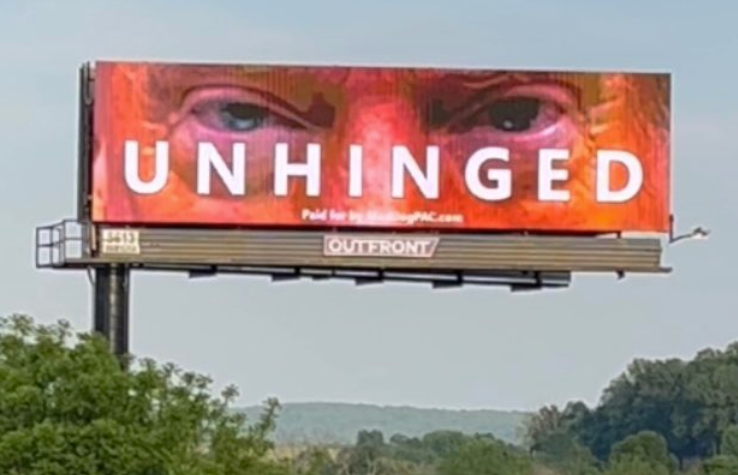
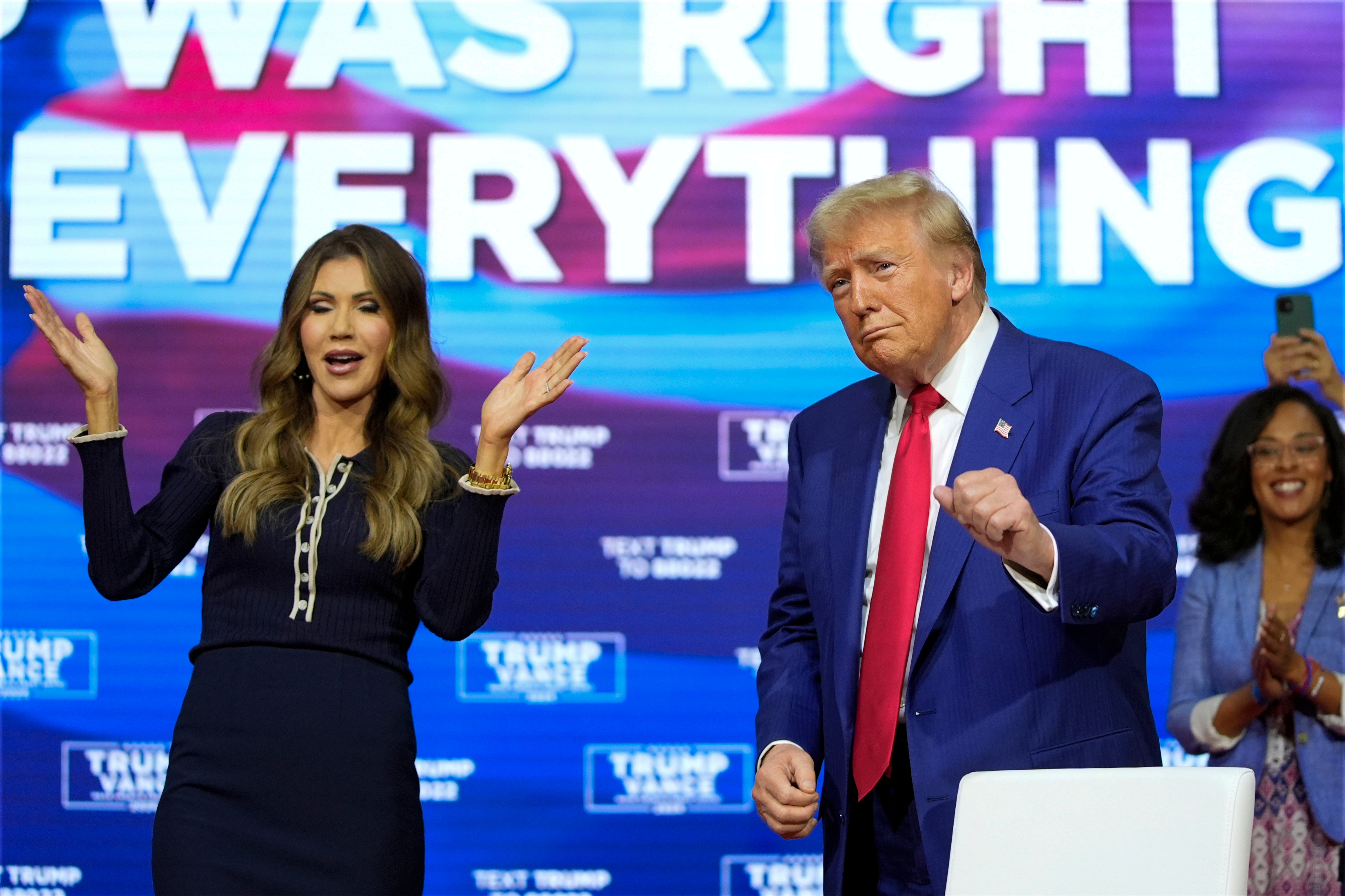

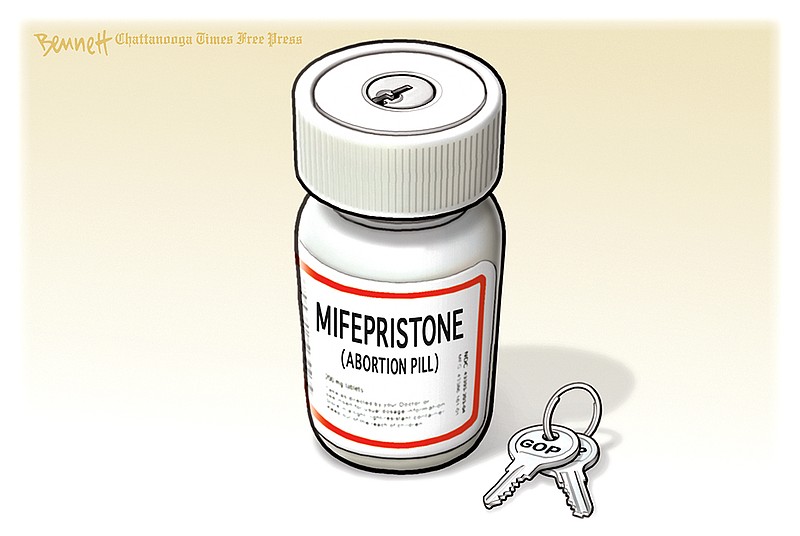

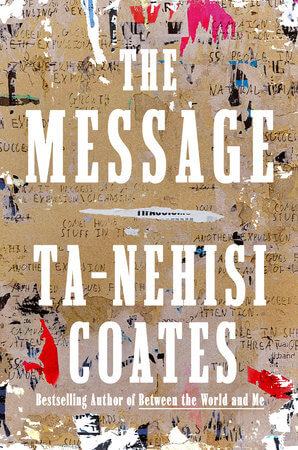


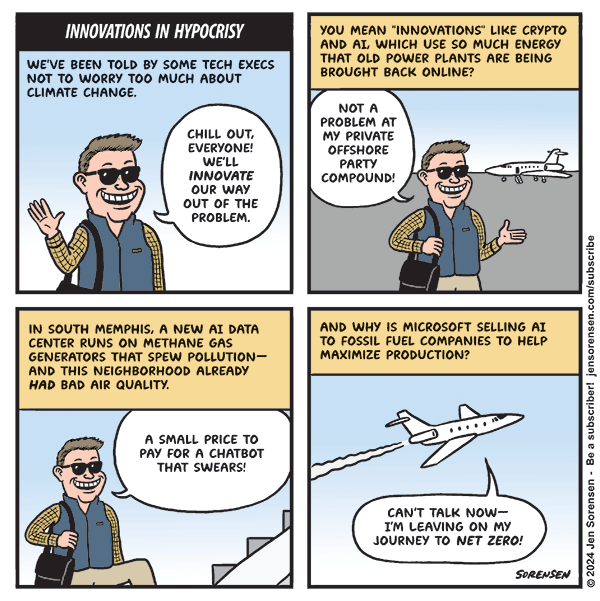
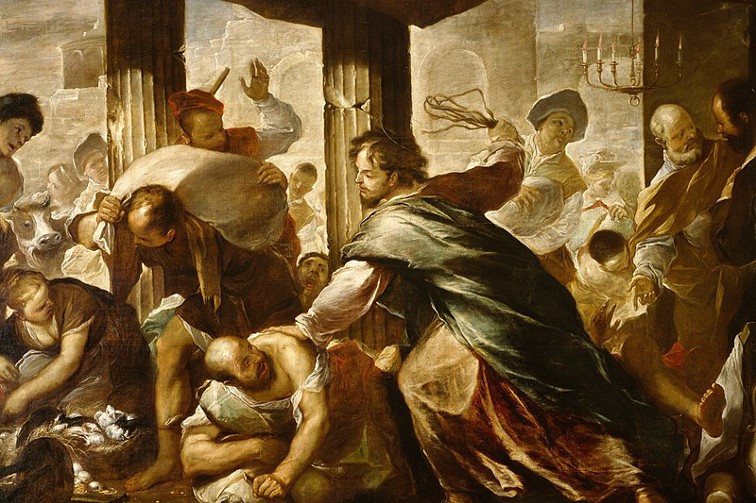







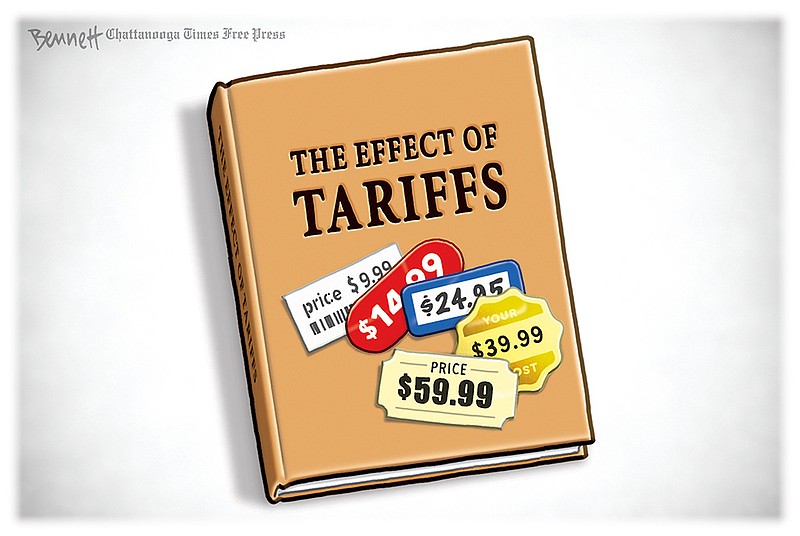
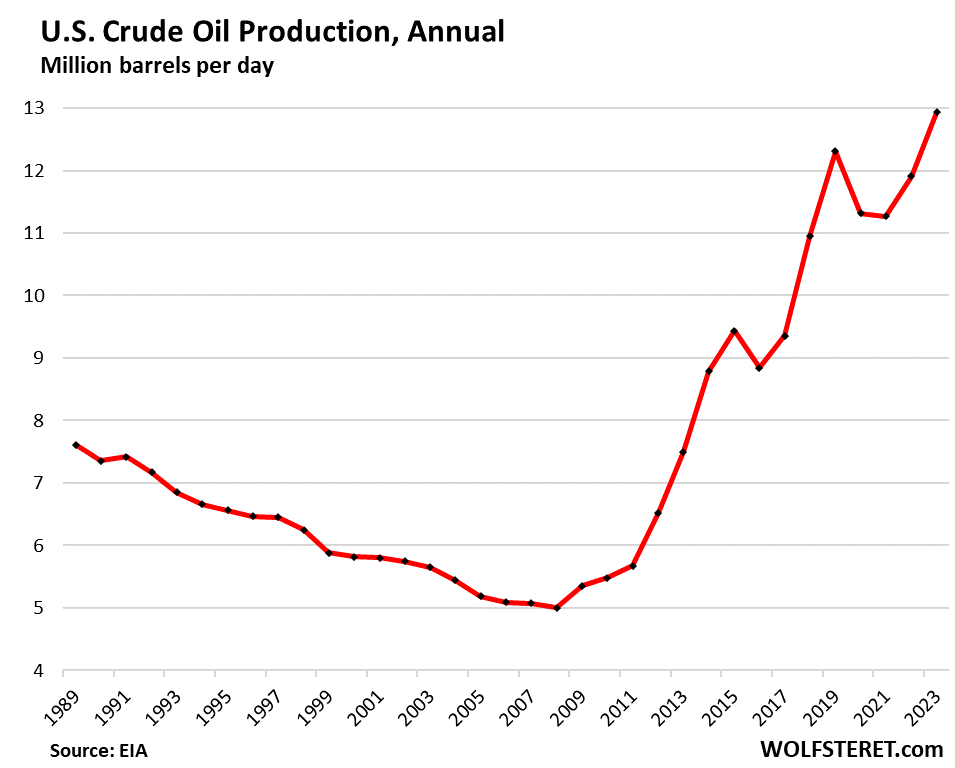
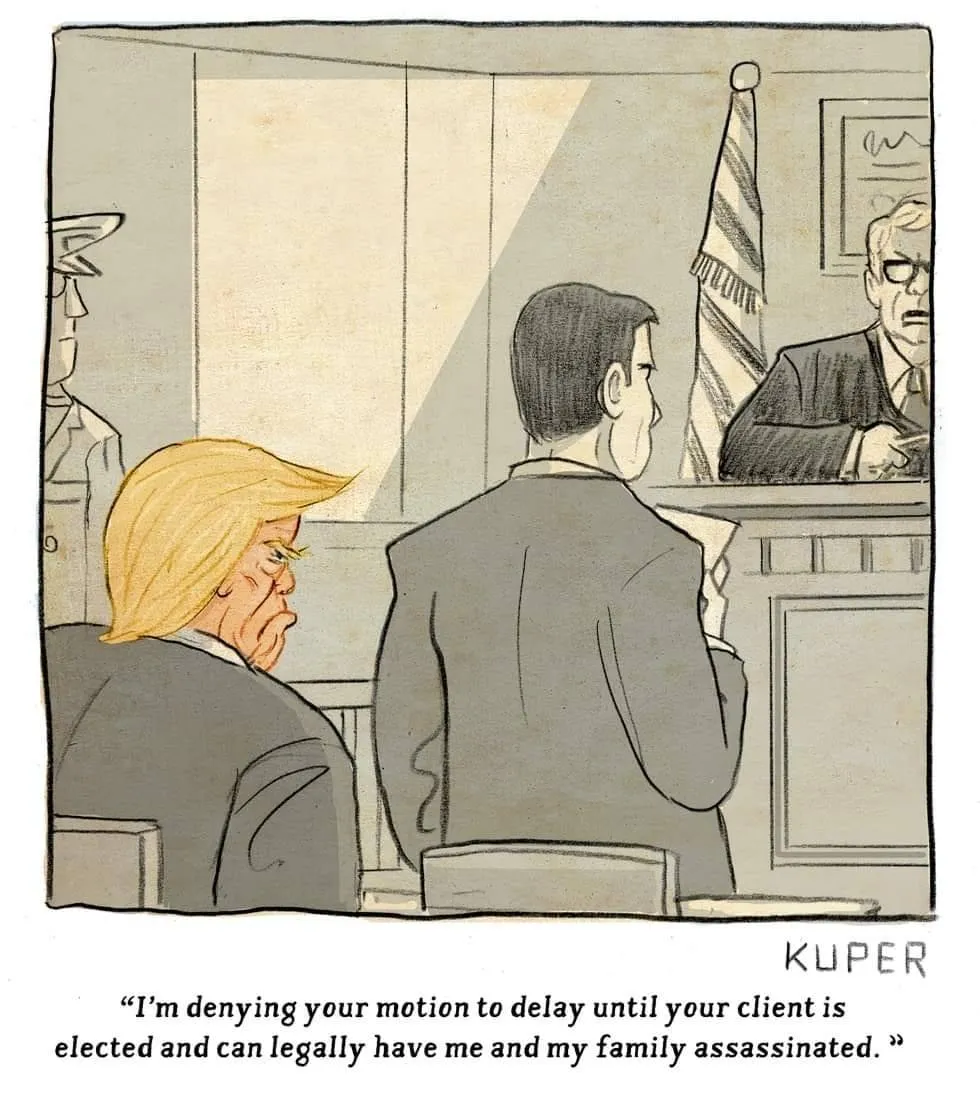




 The Weekly Sift