

The press often complains that Kamala Harris doesn’t answer enough questions.
Here are some unanswered questions for Donald Trump.
Kamala Harris faces frequent criticism from from news media sites like The New York Times and CNN for not doing more interviews or providing more details about the plans she would pursue if she becomes president. This week, she released a 82-page economic plan and gave a 24-minute interview to MSNBC’s Stephanie Ruhle, but her critics were not satisfied.
The NYT’s Reid Epstein, for example, dismissed Ruhle (the host of MSNBC’s nightly The 11th Hour) as a “friendly interviewer” and compared the interview to Trump talking to Fox News’ Sean Hannity. [1] He wrote that Ruhle
avoided posing tricky questions about positions Ms. Harris supported during her 2020 presidential campaign or what, if anything, she knew about Mr. Biden’s physical condition or mental acuity as his own campaign deteriorated. [2]
and said that “A hard-hitting interview is yet to come.” [3]
Most of the specific questions Epstein accused Harris of “evading” are questions no politician ever answers, like why her opponent out-polls her on certain issues, or how she will pursue her plans if Democrats lose the Senate. (When was the last time you heard a candidate give a forthright answer to “What if your party loses?”) And as for the more general criticism, how are voters served by “tricky” questions that aim to “hit hard” rather than elicit information?
Yesterday the NYT pounded again on its Harris-needs-to-answer-questions theme by publishing Ashley Etienne’s essay. Etienne asserted that Harris needs to explain why she wants to be president (as if every previous campaign had communicated some unique and memorable reason). In general, people run for president because they think they can do a good job for the country. Why does Harris need a better reason?
I have written before about how the corporate media’s approach to this campaign fails to serve voters. CNN’s Jake Tapper often equates doing press interviews with “answer[ing] some of the questions that voters have about her policies”, but such questions are plainly not what interviewers ask. Dana Bash’s interview with Harris and Walz mostly confronted them with Trump-campaign talking points. In June, while he was still a candidate, Joe Biden sat with ABC’s George Stephanopoulos for 22 minutes, most of which Stephanopoulos spent trying to get Biden to describe the circumstances under which he would withdraw from the race (another question no politician has ever answered). I sincerely doubt that an undecided voter would have wasted the President’s time like that.
It seems clear to me that the demand for “hard-hitting interviews” is not about getting voters the information they need. Instead, critics seek the theater of an interviewer fencing with Harris and trying to trap her with “tricky questions”.
With that distinction in mind, I pose a challenge for the talking heads complaining that Harris isn’t sitting down with them: Tell us what questions you think Harris still needs to answer. If the point is to get voters the information they need, why does it matter that you (or someone from your organization) be in the room when it happens?
The double standard. I have also often complained that the press wants to hold Harris (like Biden before her) to a standard that they don’t apply to Trump. For example, whenever Biden would say the wrong word or call someone by the wrong name, the press would largely ignore whatever he had been trying to say (even if it was perfectly clear) and instead write a story highlighting the mistake and using it to question the President’s mental capacity. But Trump often makes similar mistakes, and regularly goes off on incoherent rambles that are arguably insane. Subsequent press reports do not highlight these moments, and Trump’s mental acuity is rarely questioned. Instead, reporters do their best to read sense into Trump’s words and report what they divine he meant rather than what he said.
Trump also gets credit for being more accessible to the press than Harris, even if he does not actually answer their questions, or answers with a transparent lie. Often, Trump responds to a “hard-hitting” or “tricky” question — or even just a question he has no good answer for — by calling the questioner “nasty” or accusing him or her of representing “fake news“. This vitriol has trained many reporters not to ask Trump difficult questions.
How well do you think that tactic would work for Harris?
Taking my own advice. So what I’m going to do below is follow the advice I’ve just given: I’m going to list the questions that I believe Trump still needs to answer. In my opinion, these are all questions voters might wonder about, and nothing in them is the least bit “tricky”. I have not tried to frame them in a hostile manner. Whenever possible, I have quoted Trump directly rather than put my own interpretation on his words. I have provided references for any facts that I claim, and in several of them I ask him to point to sources he considers more trustworthy. I have tried to focus my questions on positions he holds now, without comparison to differing positions he may have taken many years ago.
I believe that Trump has not given adequate answers to any of these questions. (If you know that he has, please leave a comment with a link referencing his answer.) Further, I don’t care how Trump provides this information, as long as it results in actual answers. To satisfy me, he doesn’t have to sit down with an interviewer I like or trust. If he wants to work his answers into speeches without being interviewed at all, or even without acknowledging that anyone has asked, that would be fine too.
Unlike The New York Times, I am looking for information, not theater.
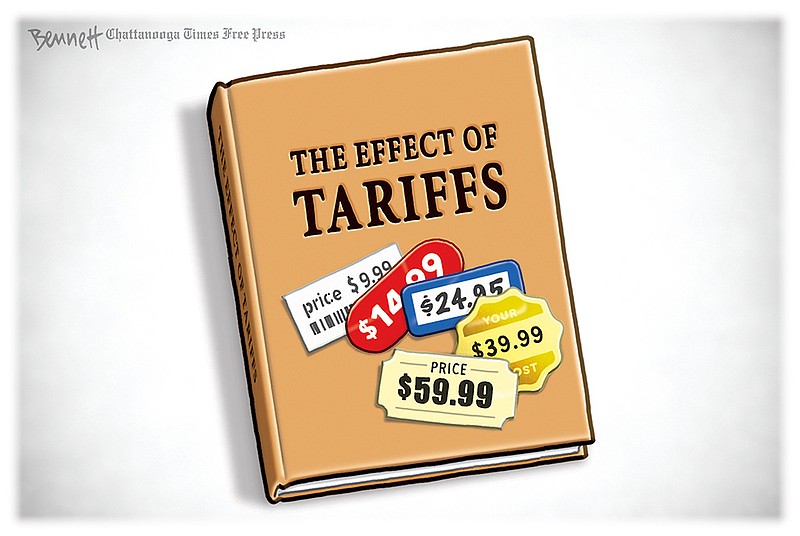
Questions about the economy. Trump’s economic proposals can be summed up as tariffs, tax cuts, and increased fossil fuel production. Since energy is an input into almost every other product, Trump is counting on increased oil production from his “drill baby drill” policy to drive down prices across the board. Meanwhile tariffs are supposed to simultaneously protect American industries from foreign competition while generating “trillions” in revenue that will bring down the deficit and pay for income tax cuts as well as some undetermined number of additional programs (like childcare, apparently). But he has provided very few specifics that can be tested and analyzed.
So here are my questions:
You have described tariffs as “a tax on another country“, even though the money is actually collected from the American importer, not the foreign exporter. What convinces you that the tax will ultimately be paid by foreign exporters (who would have to compensate by cutting their prices) rather than American consumers (who would have to pay higher prices)? Can you point to an economic analysis that supports your view?
If tariffs result in American companies facing less price competition from imports, won’t they just raise their prices? Does anything in your plan prevent this?
In some speeches you have suggested across-the-board tariffs of 10%, but in others it’s 20%, with rates up to 200% on specific products like electric cars. Can you be more specific about your tariff rates and how much revenue you expect to collect?
Many American industries depend on exports. What will you do if other countries retaliate with tariffs against American products?
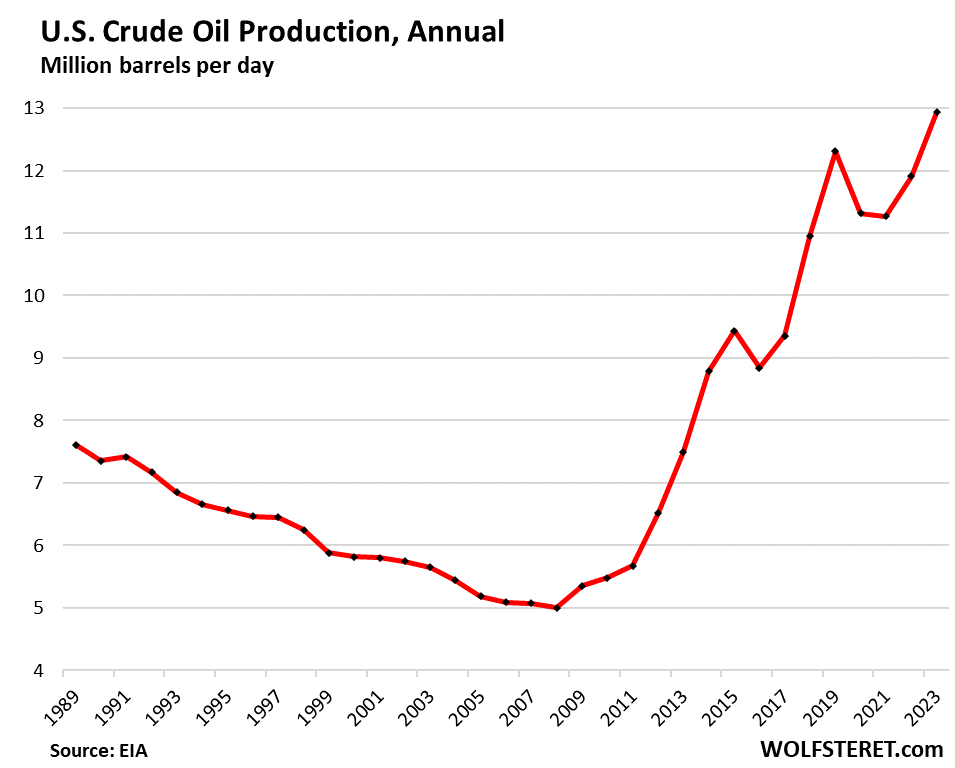
Oil production in the US has been rising steadily since 2008, and is now higher than in any other nation. The price of oil is currently lower than at any time since 2021, and at $68 per barrel is below the estimated break-even price of new wells in the Permian Basin. How much more production do you think we can get, and how low do you think the price of oil can go?
Questions about the environment. During his four years in office, Trump rolled back regulations designed to protect the environment, pulled out of the Paris Accords , and repeatedly minimized the effects of climate change.
You have said the climate change will increase sea level “one-eighth of an inch over the next 400 years“. Where did you get this information? Why do you find that source’s estimate more reliable than the EPA’s estimate that sea level is rising about an eighth of an inch every year?
Do you believe that warmer ocean temperatures contribute to destructive storms like Hurricane Helene?
Should the federal government be doing anything to decrease the use of fossil fuels in the US?
Questions about foreign policy. Trump’s first answer to questions about almost any foreign policy problem is that the problem wouldn’t exist if he were still president: Putin wouldn’t have invaded Ukraine, Hamas wouldn’t have attack Israel on October 7, and so on. Whatever you think of those claims, such answers are not adequate. The 47th president will have to deal with the situations that currently exist, independent of what might have happened in some alternate timeline.
In 2020, you proposed a modified two-state peace plan for Israel and Palestine, in which the Palestinian state would be fragmented and considerably smaller than territory Israel acquired in the 1967 war. But this year, you said that achieving two-state solution of any sort would be “very, very tough“. Do you currently have a vision of a future peace in that region? What long-term goals should US policy be working toward?
You have said you could end the Ukraine War in one day by talking to Presidents Putin and Zelenskyy, but you haven’t said what you would try to get them to agree to. J. D. Vance has described the process like this:
Trump sits down, says to the Russians, Ukrainians, and Europeans: ‘You guys need to figure out what does a peaceful settlement look like.’ And what it probably looks like is something like the current line of demarcation between Russia and Ukraine. That becomes like a demilitarized zone. It is heavily fortified so that Russians don’t invade again. Ukraine retains its independent sovereignty. Russia gets a guarantee of neutrality from Ukraine. It doesn’t join NATO. It doesn’t join some of these allied institutions.
Is that accurate?
Should the United States try to promote democracy in other countries?
You have said that Russia can do “whatever the hell they want” to NATO countries that don’t spend enough on their own defense. Which NATO nations does that currently leave vulnerable?
Questions about immigration. The issue Trump talks about most often and most passionately is immigration. But there is still much he hasn’t told us.
Earlier this year, Republican Senator James Lankford negotiated a bill to increase border security. Mitch McConnell said it didn’t pass because “our nominee for president didn’t seem to want us to do anything at all”. Is that an accurate description of what happened? Why did you oppose the bill?
You have proposed “mass deportation” of all undocumented immigrants, and have estimated that 20 million or more such people are currently in the United States. Could you describe in detail how that deportation operation would be carried out? How long do you expect this operation to take, and how much do you expect it to cost?
Given that many American citizens and legal residents have brown skin, common Hispanic names, and speak Spanish as their first language how will you protect them from being swept up in the mass deportation operation by mistake?
The US Chamber of Commerce claims we already have a labor shortage, with 8.2 million job openings but only 7.2 million job seekers. If we deport millions of workers, how will the US economy replace them? In particular, won’t deporting low-wage workers increase inflation?
Should the United States continue to honor its treaty obligations to offer asylum to refugees who face persecution in their home countries?
Is Christianity just one religion among many in America, or should the government treat Christians differently? For example, should Christian immigrants be favored over immigrants who practice Islam or some other religion?
Questions about social issues.
You have said that crime is “rampant and out of control“, and that the FBI statistics that show crime falling are “fake numbers“. Why do you base these claims on? Why is your source (whatever it is) more credible than the FBI?
You have said you would not sign a national abortion ban, and that you want the issue left to the states. But some abortion issues necessarily are made at the federal level. The drug mifepristone, used in about half of all abortions, is subject to FDA approval, which it currently has. You said in June that your FDA would not revoke access to the drug, but a subsequent comment in August was less clear. [4] Can you state a definite position on mifepristone?
In February, you told the NRA that “nothing happened” on gun control during your administration, and emphasized “We did nothing.” Can you offer any hope to Americans who worry about mass shootings?
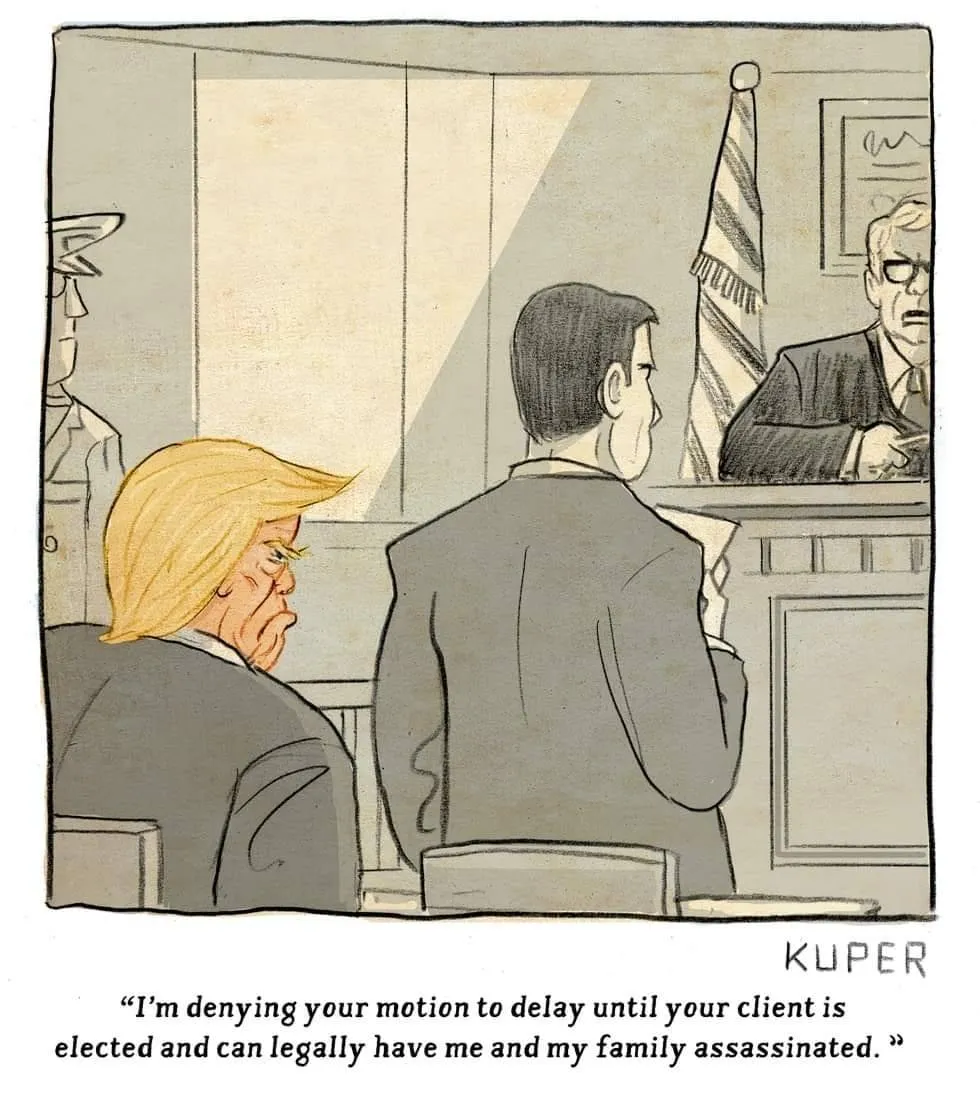
Questions about his indictments. In the summer of 2022, Trump complained that the January 6 Committee hearings were “one-sided“. But with regard to the claims made in the indictments against him, we don’t know Trump’s side of the story because he has never told it. Instead, he has refused to let himself be pinned down to any one account, and has thrown up multiple contradictory defenses, or simply claimed “I did nothing wrong” with no further details.
Sometimes, for example, he blames Antifa for the January 6 violence, sometimes he denies or minimizes the violence, and at other times he valorizes the violence by claiming that the convicted rioters are “warriors“, “hostages“, or “patriots“. Similarly, he has never explained exactly why he took classified documents to Mar-a-Lago or what he intended to do with them.
The press has simply accepted that he’s not going to provide these answers and has stopped asking the questions. That’s wrong. Voters deserve to know this information. Trump’s legal maneuvers have prevented the answers from coming out in court, but not even the Supreme Court can grant him immunity from the press or the voters. He should be asked the following questions, and criticized if he evades them.
When you asked the crowd to go to the Capitol on January 6, what did you expect them to do there? If you had gone to the Capitol yourself, as you told the crowd you would do, what did you intend to do?
The people who fought with police (and injured more than a hundred of them) on January 6 — were they your supporters?
At what point (if any) do you think the January 6th march to the Capitol started to go wrong? When did you become aware that the marchers had turned violent? Why didn’t you ask the crowd to go home at that point?
When people from your own campaign (like Bill Stepian) or your own administration (like Attorney General Bill Barr and CISA Director Chris Krebs) told you that you had lost the 2020 election and there was no significant fraud, why didn’t you believe them?
If you still believe the 2020 election was decided by fraud, how do you think the fraud was carried out? Please be specific.
Were any of the documents you brought to Mar-a-Lago after your presidency still classified? If not, when and how were they declassified?
On many occasions you have said that the Presidential Records Act gave you the right to possess the classified documents. I have looked for a legal expert who shares your interpretation of the PRA and I have not found one. Who is advising you on this? Is there a particular section in the law that you think gives you this right?
Did you understand that Mar-a-Lago had not been approved as a secure site for storing classified documents, and that you no longer had a security clearance?
Why were you interested in keeping those particular documents? What did you intend to do with them?
Why didn’t you return the documents when the National Archives asked for them?
When your lawyers told the government that all classified documents had been returned, were they carrying out your instructions? Did you believe that claim to be true?
When the FBI’s search discovered classified documents at Mar-a-Lago, were you surprised, or did you already know the documents were there? Some of your supporters believe the FBI planted the documents. Do you?
Were you aware that your employees at Mar-a-Lago were moving boxes of documents from room to room? Did you instruct them to do so? Was the purpose to hide the documents from someone?
Conclusion. The New York Times and corporate media in general are fond of “both sides” framing, a tendency the Pitchbot often parodies:
Whether it’s Kamala Harris celebrating Diwali or Donald Trump celebrating one really rough and nasty day of police violence, both candidates have embraced controversial holidays.
But on the unanswered-questions theme, coverage has been bizarrely one-sided: Only Harris needs to answer more questions or provide more information, and only Harris is criticized for “evasion” if her answers are unsatisfactory.
I hope the list above has made obvious that Trump also has a lot of questions to answer. The fact that the press has stopped asking does not mean that he has answered.
[1] The Ruhle/Hannity comparison is a false equivalence.
After the 2020 election, Hannity (like several other Fox News hosts) said one thing to his viewers about Trump’s allegations of voting-machine fraud, but said something quite different to colleagues in text messages. He was not the whole problem, but he certainly played a role in Fox needing to pay $787 million to settle Dominion’s defamation lawsuit. Ruhle has not been associated with any comparable journalistic wrongdoing. Hannity has repeatedly participated in Republican fund-raising, including for Trump’s 2020 campaign. Such partisan activity is a firing offense at MSNBC — and virtually any news organization other than Fox.
James Fallows commented:
We know how [Stephanie Ruhle is] going to vote—she has told us, and explained why. But she is not like Sean Hannity—nor Fox’s Jesse Watters or the now-exiled Tucker Carlson. She differs in that she respects the boundaries of established fact and won’t lie or pander to help “her side.” (If you disagree: Please send me an example of her doing so.)
[2] Harris has made it clear that she believes President Biden retains the physical and mental capacity to do his job, so there is no further question for her to answer. Prior to Biden withdrawing his candidacy, worries within the Democratic Party centered on whether Biden could turn the presidential race around and govern effectively until January, 2029 — not whether he could govern effectively until January, 2025.
[3] It’s striking how perfectly the satirical New York Times Pitchbot anticipated Epstein’s commentary:
Kamala Harris gave an interview, but not the right kind of interview.
[4] “Less clear” is kind. TNR described Trump’s answer as “gibberish“.
 The Weekly Sift
Comments
I find such a list of questions for Trump to be depressing. He’d just answer with some word salad about sharks and electrocution. The media might mention it briefly one day, but then it would never be mentioned again.
Trump’s failing cognitive abilities are there for anybody who listens to him speak. The problem is that people instead get the media “sanesplaining” him.
Thanks for putting this list together. Another commenter found it depressing (which the situation is), but “to see what is in front of one’s nose needs a constant struggle”, and I find this list useful to that end.
Clearly candidate Trump lacks the capacity to answer those questions, but I think everyone who supports him ought to read them. Those who aren’t fully immersed in the cult might learn something.
The problem is, this is an adult asking germane, meaningful questions of a petulant little schoolyard bully who knows that not only won’t there be any consequences for ignoring/lying about them, he’ll actually be rewarded
he’ll just call the questioner nasty and that will be it. No one wants or is willing to be singled out as a nasty journalist. As far as Biden goes, yes he was bad in the debate but then he gave a press conference at the NATO summit and the big news was he stumbled one time. Yet the pressure is on Harris to come up with how long have you know that Joe is suffering from dementia. As she said she hasn’t seen a decline and second there is no diagnosis. So, as far as we know he is fine. Talk about a witch hunt.
This was a particularly good piece. It’s a shame that when I shared it to Facebook, the algorithm obviously clamped down on it, as I have a number of followers that comment on my posts and after this one, crickets.
M
Get Outlook for Androidhttps://aka.ms/ghei36
Trackbacks
[…] This week’s featured post is “Questions for Donald Trump“. […]
[…] different genre. Ideally, something extra dry, like The News, if there were such a thing any more. [Although I read this source regularly.] At a minimum, something closer to […]